
Industrial Packaging for Co-Packing Companies: Choosing the Right Pails, Drums, and IBC Totes
Co-packing companies play an important role in helping brands manufacture, package, store, and prepare products for distribution. Whether they work with food products, chemicals, cleaning solutions, coatings, ingredients, or other industrial materials, one thing is always essential: reliable packaging.
The right packaging helps protect the product, support safe handling, reduce contamination risks, and keep production running smoothly. For co-packers, choosing the right packaging is not only about the container itself. It is also about volume, product type, storage needs, transportation, regulatory requirements, and customer expectations.
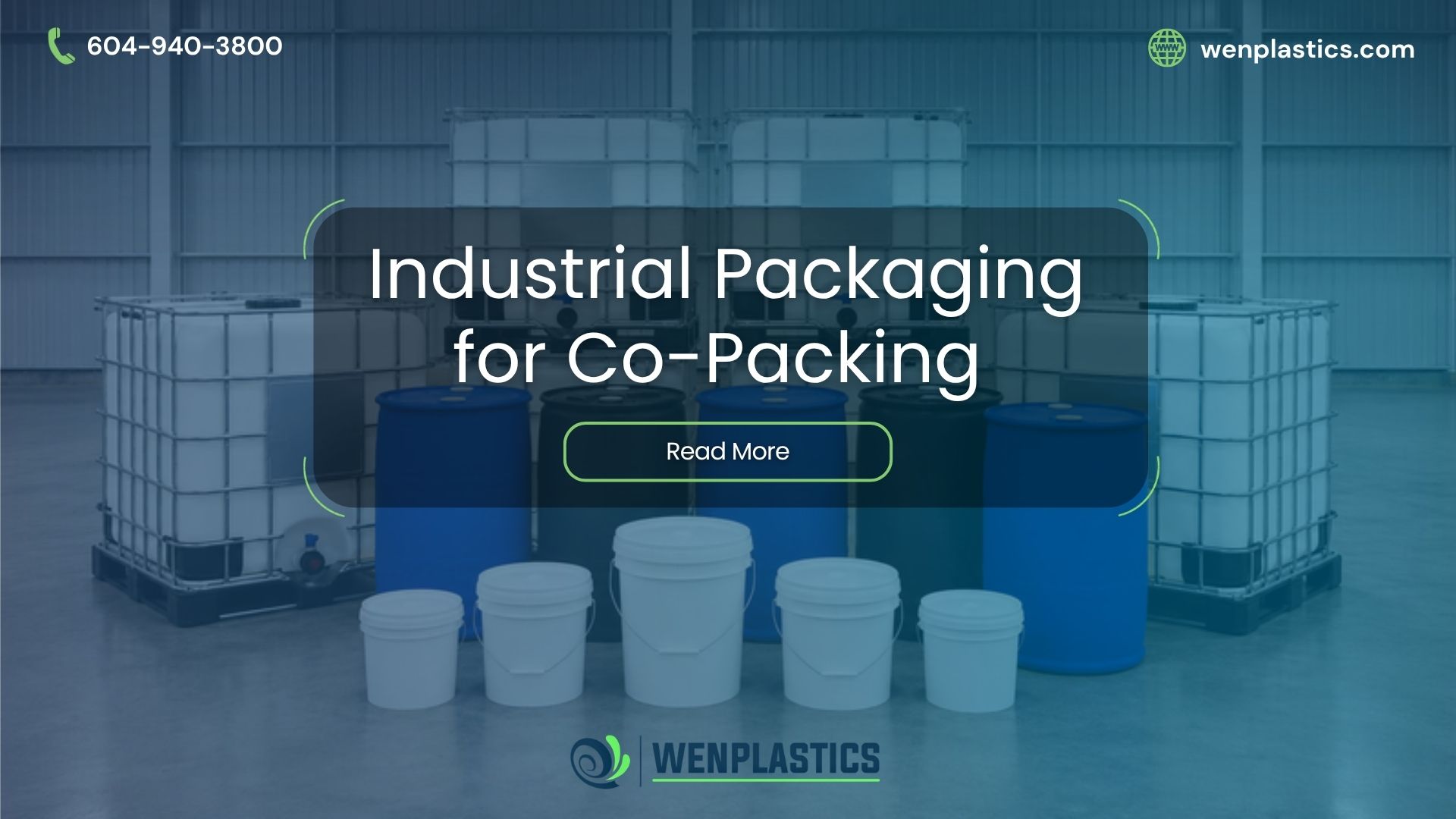
At Wenplastics, we supply industrial packaging solutions such as plastic pails, plastic drums, and IBC totes to support businesses that need dependable storage and handling options.
Why Packaging Matters for Co-Packing Companies
Co-packers often work with different clients, products, and production volumes. This means packaging needs can change depending on the project.
A co-packing company may need smaller containers for finished products, larger drums for intermediate storage, or IBC totes for bulk liquid handling. In some cases, food-grade packaging may be required. In others, UN-rated containers may be necessary for regulated or hazardous materials.
The right packaging can help co-packers:
- Protect product quality
- Reduce contamination risks
- Improve storage and transportation efficiency
- Support regulatory and safety requirements
- Handle different batch sizes
- Keep production schedules on track
- Build trust with their own clients
Using the wrong container, on the other hand, can lead to product loss, delays, safety issues, or compliance concerns.
Plastic Pails for Smaller Batches and Finished Products
Plastic pails are a practical option for co-packers that handle smaller batches, finished products, powders, ingredients, coatings, adhesives, food products, or chemical products.
They are easy to move, stack, store, and distribute. Depending on the product, pails can be used for both temporary storage and final packaging.
Plastic pails are commonly used for:
- Food ingredients
- Powders
- Sauces and liquid products
- Cleaning products
- Coatings
- Paints
- Adhesives
- Industrial chemicals
- Construction materials
For co-packing operations, lid selection is also important. Some products may require secure lids, tamper-evident options, or UN-rated lids depending on the application.
Tear-tab lids can be especially useful when the customer needs to know whether the container has been opened. This helps protect product integrity and gives the end user more confidence.
Plastic Drums for Medium-Volume Storage and Shipping
Plastic drums are a good option when co-packers need more capacity than pails but do not need the full volume of an IBC tote.
They are commonly used for liquid products, chemicals, ingredients, and industrial materials that need to be stored or transported in medium volumes.
Plastic drums can be useful for:
- Bulk liquids
- Cleaning solutions
- Chemical products
- Food-related ingredients, when suitable
- Industrial fluids
- Intermediate production storage
- Shipping and distribution
For co-packers, drums can help create a balance between manageable handling and higher storage capacity. They are also useful when products need to be transported safely without using smaller individual containers.
When choosing plastic drums, businesses should consider the product type, closure style, storage conditions, and whether the drum needs to meet specific requirements for safety or transportation.
IBC Totes for Bulk Liquid Handling
IBC totes are often the best option when co-packers need to handle larger volumes of liquid products.
They are designed for bulk storage and transportation, making them useful for companies that work with high-volume production, liquid ingredients, chemicals, or industrial materials.
IBC totes are commonly used for:
- Bulk liquid storage
- Liquid ingredients
- Chemical handling
- Cleaning products
- Agricultural products
- Industrial fluids
- Manufacturing processes
- Product transfer and distribution
At Wenplastics, IBC tote options may include new, rebottled, and reconditioned totes depending on the customer’s needs.
A new IBC tote is often suitable for sensitive products or applications where the highest level of container assurance is required.
A rebottled IBC tote includes a new inner bottle with a reconditioned cage. This can be a practical option when the customer wants a new bottle but also wants a more cost-effective solution.
A reconditioned IBC tote may be suitable for applications where the previous use and cleaning process are acceptable for the product being stored.
For co-packers, choosing between new, rebottled, and reconditioned IBC totes depends on the product, contamination risk, client expectations, and regulatory requirements.
Food-Grade and UN-Rated Packaging Considerations
Co-packing companies often work with products that require specific packaging standards.
For food, ingredients, or sensitive products, food-grade packaging may be important to help protect product quality and reduce contamination risks.
For chemicals or regulated materials, UN-rated packaging may be required to support safer handling, storage, or transportation.
Before choosing packaging, co-packers should ask:
- Is the product food-related?
- Is the product sensitive to contamination?
- Does the product require UN-rated packaging?
- Will the container be used for storage, shipping, or both?
- What does the client require?
- Are there specific regulations for this product type?
- Does the product need tamper-evident packaging?
These questions help prevent problems before production begins.
Preventing Contamination in Co-Packing Packaging
Contamination control is especially important for co-packers because they may handle products from different brands, industries, or formulations.
Even small contamination issues can affect product quality, customer trust, and regulatory compliance.
To reduce contamination risks, co-packers should:
- Choose the right container for the product
- Use food-grade packaging when needed
- Store empty containers in a clean, dry area
- Keep lids and closures protected before use
- Use tamper-evident lids when appropriate
- Avoid using containers with unknown history for sensitive products
- Match packaging type to the product’s risk level
- Work with a reliable packaging supplier
For sensitive applications, new or rebottled packaging may be a better choice because the inner bottle or container has not been previously used.
Choosing the Right Packaging Type
The best packaging option depends on volume, product type, handling process, and final use.
| Packaging Type | Best For |
| Plastic pails | Smaller batches, finished products, powders, coatings, food products, chemicals |
| Plastic drums | Medium-volume liquids, industrial products, chemicals, ingredients, shipping |
| IBC totes | Bulk liquid storage, high-volume handling, industrial fluids, large production batches |
In many co-packing operations, more than one packaging type may be needed. For example, a company may receive ingredients in IBC totes, transfer product into drums during production, and package the final product in plastic pails.
Why Working With a Local Packaging Supplier Matters
For co-packers, packaging delays can affect the entire production schedule. If containers arrive late, production may stop, orders may be delayed, and clients may be affected.
Working with a local or regional supplier can help reduce lead times and improve supply reliability.
A reliable packaging supplier can help co-packers:
- Access packaging faster
- Plan inventory more effectively
- Reduce downtime
- Support urgent production needs
- Choose the right container for each application
- Improve communication and service
For businesses in Canada, having access to local industrial packaging options can be a practical advantage, especially when production timelines are tight.
Final Thoughts
Co-packing companies need packaging that is reliable, practical, and appropriate for the products they handle. Plastic pails, plastic drums, and IBC totes all serve different roles in storage, production, and distribution.
The right choice depends on the product type, volume, safety requirements, contamination risk, and customer expectations.
By choosing the right packaging solution, co-packers can protect product quality, improve efficiency, and support safer handling from production to delivery.
Wenplastics supplies industrial packaging options for businesses that need plastic pails, plastic drums, and IBC totes for a wide range of applications. Contact our team to discuss the best packaging solution for your co-packing operation.

Comments are closed