
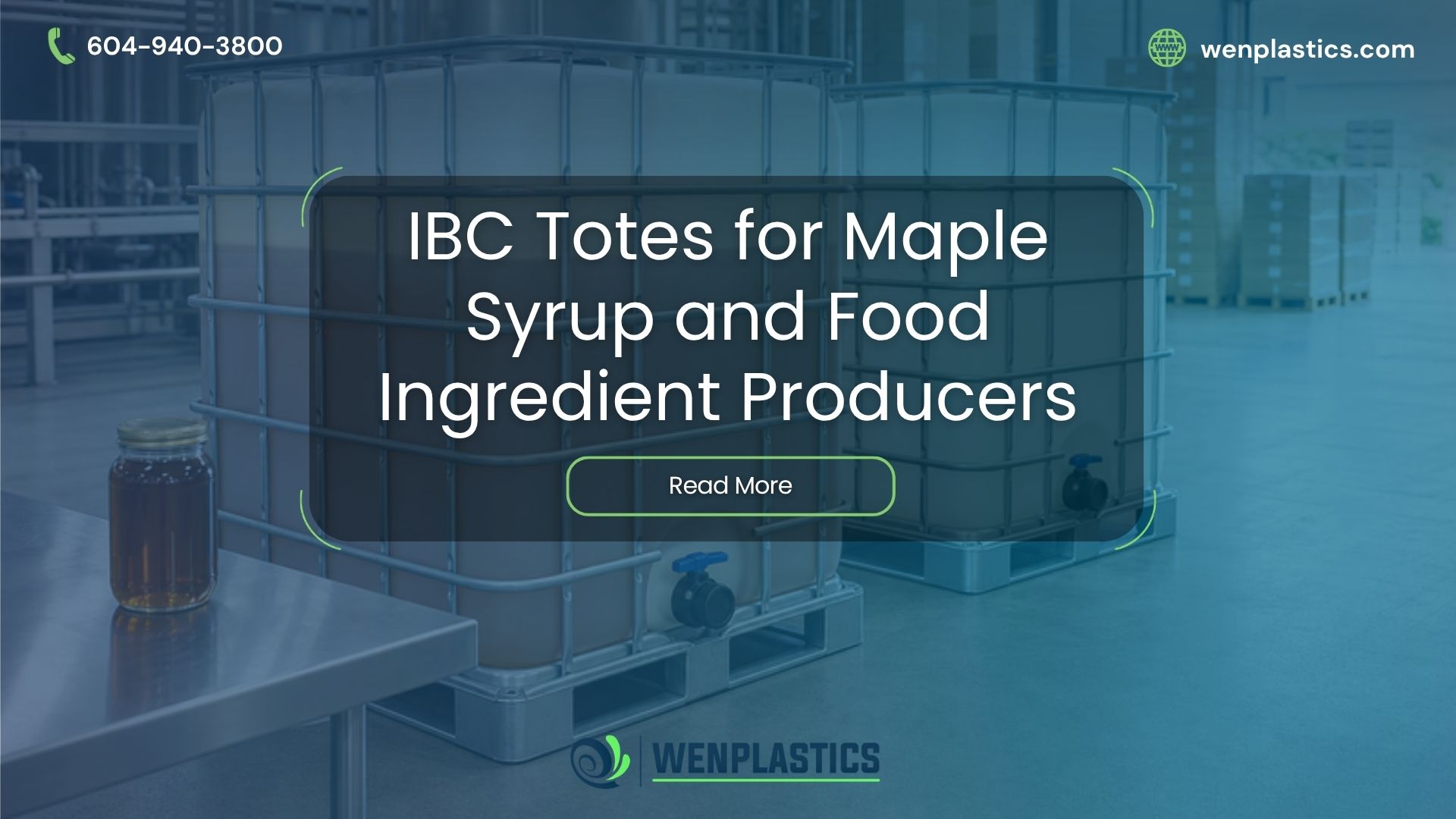
IBC Totes for Maple Syrup and Food Ingredient Producers
Maple syrup and food ingredient producers often need to store and transport large quantities of liquid without compromising product quality, cleanliness, or operational efficiency. For businesses handling bulk products, food-grade IBC totes can provide a practical alternative to smaller pails and drums.
With a standard capacity of approximately 1,000 litres or 275 gallons, IBC totes allow producers to consolidate large volumes into a container that can be handled using forklifts and pallet jacks.
Why Use IBC Totes for Maple Syrup?
Maple syrup production can involve significant volumes, especially for processors, distributors, co-packers, and commercial food manufacturers.
IBC totes can be used for temporary storage, internal transfers, bulk transportation, and supplying syrup to companies that package it into retail-sized containers.
Their rectangular design provides several operational advantages:
- Efficient use of warehouse and truck space
- Reduced reliance on numerous smaller containers
- Convenient forklift and pallet-jack handling
- Controlled dispensing through a bottom valve
- Easier inventory organization
- Lower packaging requirements for bulk shipments
Instead of managing dozens of plastic pails, producers can consolidate their syrup into fewer bulk containers.
Applications Beyond Maple Syrup
Food-grade IBC totes are also useful for businesses producing or handling other liquid and semi-liquid ingredients, including:
- Honey
- Molasses
- Glucose and liquid sweeteners
- Juice concentrates
- Beverage ingredients
- Cooking oils
- Vinegar
- Sauces and liquid seasonings
- Dairy ingredients
- Food flavourings
- Liquid extracts
- Brines and marinades
However, container suitability depends on the characteristics of the specific product. Temperature, viscosity, acidity, storage duration, filling process, and valve compatibility should all be considered before selecting an IBC tote.
What Makes an IBC Tote Suitable for Food Ingredients?
Packaging that comes into direct contact with food must be safe and suitable for its intended application. Health Canada identifies packaging and its components as food-contact materials, while the FDA applies requirements to substances used in food packaging and containers.
When selecting an IBC tote for maple syrup or another food ingredient, producers should evaluate the complete container, including its:
- Inner plastic bottle
- Resin composition
- Valve
- Gaskets
- Top closure
- Seals
- Previous-use history
A food-grade inner bottle is commonly manufactured from virgin high-density polyethylene, or HDPE. It should not have previously contained chemicals, waste, or unknown materials.
New vs Rebottled IBC Totes
Food ingredient producers generally have two practical options.
Brand-New IBC Totes
A brand-new IBC tote includes a new inner bottle, cage, pallet, valve, and other components. It provides the highest level of traceability and is often preferred for sensitive products and operations with strict supplier-approval requirements.
Rebottled IBC Totes
A rebottled IBC tote combines a new inner bottle with a previously used structural cage and pallet. Because the product only contacts the new bottle and approved product-contact components, this option may provide a cost-effective solution for certain food applications.
The valve, gaskets, closures, and other product-contact parts must still be appropriate for the ingredient being stored. Buyers should confirm specifications with their packaging supplier before ordering.
Reconditioned IBC totes with previously used bottles are generally not recommended for direct food contact when the bottle’s history or previous contents cannot be fully verified.
Food Grade and UN Rated Are Not the Same
Food-grade suitability and UN certification address different requirements.
Food-grade packaging concerns whether the materials that contact the product are appropriate for food applications. UN-rated packaging is tested and marked for the transportation of specific regulated dangerous goods.
A tote can be food-grade without being UN-rated, or UN-rated without being suitable for food contact. Producers must select containers based on the actual product and its transportation requirements.
Maple syrup and most ordinary food ingredients do not require UN-rated packaging. However, food-processing companies may also handle cleaning agents or regulated chemicals that require separate UN-certified containers.
Temperature and Filling Conditions
Maple syrup may be handled at elevated temperatures during processing. Producers should never assume that every plastic IBC tote is suitable for hot filling.
Before filling an IBC tote, confirm:
- Maximum recommended filling temperature
- Whether cooling is required before transfer
- How temperature affects the bottle and valve
- Whether the tote needs ventilation during cooling
- The recommended storage temperature
- Whether the product may crystallize or thicken
Hot liquid can soften plastic, create pressure changes, and affect container performance. Filling conditions should always follow the tote manufacturer’s specifications.
Choosing the Right Valve and Gasket
Maple syrup and concentrated ingredients can be considerably more viscous than water. The outlet system should allow the product to dispense efficiently without creating unnecessary waste.
Important considerations include:
- Valve diameter
- Butterfly or ball valve design
- Outlet thread size
- Gasket material
- Product viscosity
- Required hoses or adapters
- Cleaning and sanitation procedures
The gasket must be compatible with both the ingredient and the producer’s cleaning process. If the wrong gasket is selected, swelling, leakage, or deterioration may occur.
Storage and Handling Practices
Even when the correct IBC tote is selected, proper handling remains essential.
Food ingredient producers should:
- Store totes in a clean, dry, controlled area
- Protect them from direct sunlight and extreme temperatures
- Keep valves closed and protected
- Inspect bottles, cages, pallets, valves, and closures
- Clearly identify the product and production batch
- Maintain traceability records
- Use appropriate equipment when moving full totes
- Follow the manufacturer’s stacking instructions
- Prevent cross-contamination during filling and dispensing
Full IBC totes can be extremely heavy. The total weight depends on the density of the ingredient, not only the tote’s volume. Handling equipment must be rated for the actual filled weight.
A More Efficient Bulk Packaging Solution
For maple syrup producers and food manufacturers, the right IBC tote can improve storage efficiency, simplify material handling, and reduce the number of individual containers required for bulk operations.
Wenplastics manufactures and supplies IBC tote solutions for businesses across Canada and the United States. Our available options include brand-new and rebottled IBC totes with new food-grade, BPA-free virgin HDPE bottles for suitable food and beverage applications.
Contact Wenplastics to discuss your product, filling conditions, required components, order volume, and delivery location. Our team can help you select an appropriate bulk packaging solution for your operation.

Comments are closed