
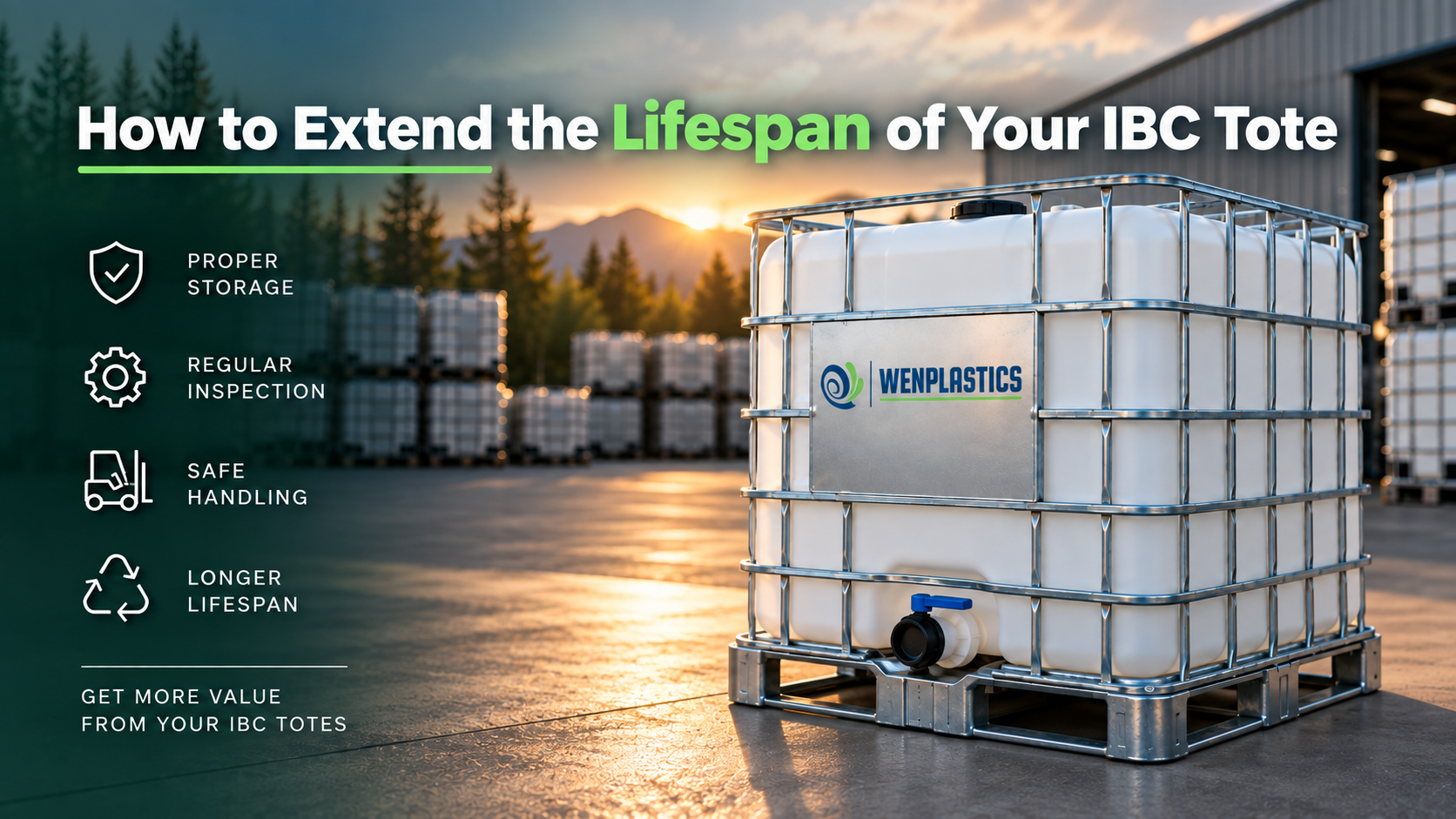
How to Extend the Lifespan of Your IBC Tote
IBC totes are built for demanding industrial applications, but proper care can make a significant difference in how long they remain useful.
Storage conditions, handling, the type of product inside the container, and regular inspections can all affect the condition of the bottle, valve, cage, and pallet.
By following a few practical steps, businesses can help reduce unnecessary damage, identify problems earlier, and get more value from their IBC totes.
How Long Can an IBC Tote Last?
There is no single lifespan that applies to every IBC tote.
How long an IBC remains usable depends on several factors, including:
- The product stored inside
- How frequently the tote is filled and emptied
- Storage conditions
- Exposure to sunlight and weather
- Transportation and forklift handling
- The condition of the valve, bottle, cage, and pallet
- Cleaning and maintenance practices
Rather than relying only on the age of the tote, businesses should regularly evaluate its actual condition and suitability for the intended application.
1. Store Your IBC Tote Properly
Good storage practices are one of the simplest ways to protect an IBC tote.
Whenever possible, totes should be kept on a stable, level surface and protected from unnecessary exposure to harsh weather conditions.
Long-term exposure to sunlight can gradually affect plastic materials, while moisture may contribute to corrosion on metal components.
If IBC totes must be stored outdoors, consider protecting them from prolonged UV exposure and extreme environmental conditions.
Proper storage also reduces the risk of accidental impacts, instability, and damage caused by uneven surfaces.
2. Use the Right IBC Tote for the Product
The material stored inside an IBC can have a major impact on the condition of the container.
Different liquids may interact differently with the HDPE bottle, valve, seals, and gaskets.
Before filling an IBC tote, businesses should confirm that the container and its components are suitable for the intended product.
This is especially important when dealing with chemicals, food-related products, or other applications where contamination or material compatibility may be a concern.
Using the right type of IBC from the beginning can help prevent premature wear and avoid unnecessary replacement.
3. Inspect the IBC Tote Regularly
Routine inspections make it easier to identify small problems before they become larger ones.
Before filling or moving an IBC tote, check the major components carefully.
Inspect the Inner Bottle
Look for:
- Cracks
- Deep scratches
- Deformation
- Discoloration
- Leaks
- Damage near the outlet
The area around the bottom valve deserves particular attention because it is one of the most common points where leaks or damage may occur.
Inspect the Metal Cage
Check for:
- Bent sections
- Broken welds
- Heavy corrosion
- Structural damage
- Loose connections
The cage protects the inner bottle, so significant damage can reduce the overall stability and safety of the container.
Inspect the Pallet or Base
Look for:
- Broken sections
- Bent supports
- Severe corrosion
- Forklift damage
- Instability
A damaged base can make the tote unsafe to move, especially when it is full.
4. Protect the Valve and Connections
The valve is one of the most frequently used components of an IBC tote and can experience wear over time.
Avoid striking the valve during transportation or forklift handling, and make sure the outlet is properly protected when the tote is not being used.
Operators should regularly check for:
- Dripping
- Loose fittings
- Damaged threads
- Worn seals
- Cracked gaskets
- Missing caps
In some cases, replacing a valve, gasket, or cap can help extend the useful life of the tote without replacing the entire container.
5. Handle IBC Totes Carefully
Improper handling can shorten the life of an IBC very quickly.
Forklift impacts, dropping the tote, dragging it across the ground, or improperly securing it during transportation can damage both the bottle and structural components.
When moving an IBC tote:
- Use appropriate material-handling equipment.
- Make sure forklift forks are correctly positioned.
- Avoid sudden impacts.
- Do not move damaged or unstable totes while loaded.
- Secure totes properly during transportation.
- Follow the manufacturer’s stacking recommendations.
Careful handling protects not only the container but also employees, equipment, and the product inside.
6. Clean IBC Totes Properly
Cleaning can be an important part of extending the useful life of reusable industrial packaging.
However, the cleaning method should be appropriate for both the previous contents and the tote material.
Residue left inside the bottle can lead to contamination or make future cleaning more difficult.
At the same time, aggressive cleaning methods or incompatible cleaning chemicals may damage the bottle, seals, or other components.
Businesses should follow appropriate cleaning procedures for the products being handled and avoid reusing an IBC when its previous contents make it unsuitable for the next application.
7. Avoid Unnecessary UV and Temperature Exposure
Plastic materials can gradually deteriorate when repeatedly exposed to harsh environmental conditions.
Extended exposure to direct sunlight can contribute to UV degradation, while extreme temperatures may place additional stress on plastic components.
Whenever possible:
- Store IBCs in a covered area.
- Avoid unnecessary long-term exposure to direct sunlight.
- Protect totes from extreme temperature fluctuations.
- Follow storage recommendations for the product inside the tote.
These simple measures can help preserve both the container and its contents.
8. Replace Worn Components Before They Cause Bigger Problems
An IBC tote is made up of several components, and they do not always wear out at the same time.
A damaged valve or gasket does not necessarily mean that the entire tote needs to be discarded.
Depending on the condition of the container, individual components may be repaired or replaced.
Early maintenance can help prevent:
- Leaks
- Product loss
- Further structural damage
- Contamination
- Unexpected downtime
Inspecting the tote regularly allows businesses to address smaller issues before they affect the entire container.
When Should an IBC Tote Be Replaced?
Even with proper maintenance, there comes a point when an IBC or one of its major components should no longer remain in service.
Warning signs can include:
- Cracks in the inner bottle
- Permanent deformation
- Significant leaks
- Severe corrosion
- Major cage damage
- An unstable or damaged pallet
- Repeated valve failures
- Chemical damage
- Unknown or unsuitable previous contents
The decision should be based on the condition of the tote, its intended use, and any applicable safety or transportation requirements.
If there is uncertainty about the structural integrity of the container, it should be inspected before being returned to service.
Can an IBC Tote Be Reconditioned or Rebottled?
In many cases, extending the life of an IBC does not mean keeping every original component indefinitely.
Reusable components may still have value even when another part of the container needs to be replaced.
Reconditioned IBC Totes
Reconditioned IBC totes typically reuse the existing bottle and structural components after an appropriate cleaning and inspection process.
They can be a practical option for many industrial applications where a new inner bottle is not required.
Rebottled IBC Totes
A rebottled IBC uses a brand-new HDPE inner bottle combined with a suitable used cage and pallet.
This gives the container a new product-contact surface while allowing the reusable structural components to remain in circulation.
For businesses that need a new bottle without purchasing an entirely new IBC, rebottling can provide a practical alternative.
Extending the Life of Industrial Packaging
Proper storage, regular inspections, careful handling, and timely maintenance can help businesses get more value from their IBC totes.
The goal is not simply to keep a container in service for as long as possible.
Instead, businesses should focus on keeping IBC totes in suitable condition, replacing worn components when necessary, and identifying opportunities for reuse, rebottling, reconditioning, or recycling.
This approach can help reduce unnecessary waste while maintaining safe and reliable industrial packaging.
IBC Tote Solutions from Wenplastics
Wenplastics provides industrial packaging solutions including brand-new, rebottled, and reconditioned IBC totes, as well as IBC refurbishment and plastic recovery services.
By giving reusable components and recovered plastic materials another productive use, Wenplastics helps businesses reduce waste and extend the value of industrial packaging.
If you need help choosing the right IBC tote for your application or evaluating replacement and refurbishment options, contact Wenplastics to discuss your requirements.

No responses yet