
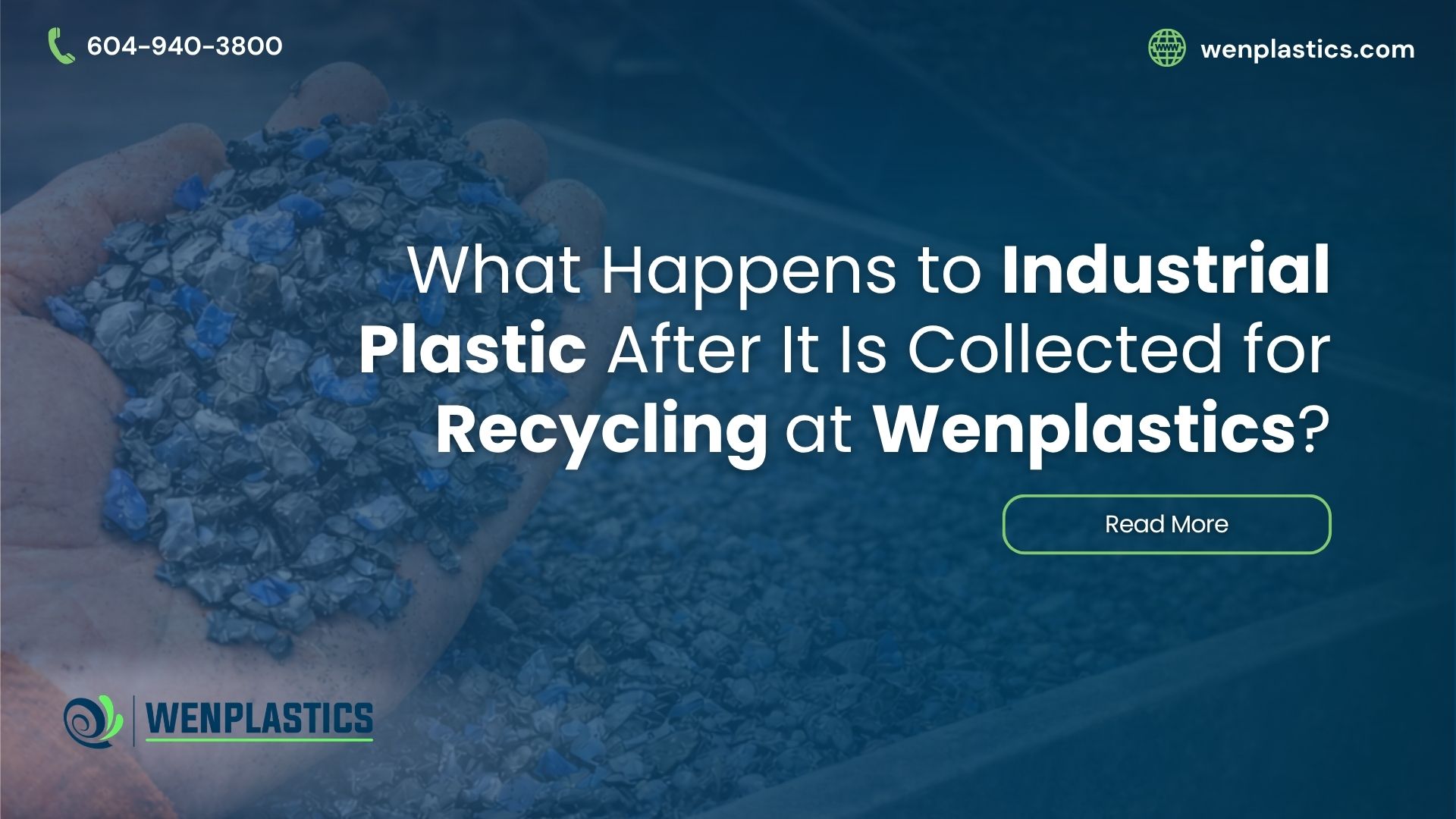
What Happens to Industrial Plastic After It Is Collected for Recycling at Wenplastics?
Industrial plastic waste does not have to be the end of the material’s useful life.
For manufacturers, warehouses, distributors, and other businesses, used plastic products can often be recovered, cleaned, processed, and prepared for another manufacturing cycle instead of being sent directly to disposal.
At Wenplastics, collected industrial plastic goes through several stages before it can become reusable raw material. Depending on the type of plastic and its condition, the process may include sorting, cleaning, preparation, size reduction, and quality evaluation.
Here is what happens after industrial plastic arrives at Wenplastics.
1. Collection and Receiving
The recycling process begins when industrial plastic is collected from businesses and transported to Wenplastics.
Depending on the source, recovered material may include:
- Used industrial plastic packaging
- HDPE and PP components
- Plastic pipes
- Production scrap
- Damaged or end-of-life plastic products
- Other recyclable rigid plastic materials
Once the material arrives, it is received and evaluated before processing begins.
The material type, condition, previous application, and level of contamination can all affect how it is handled.
2. Sorting the Material
Not all plastic is the same.
One of the most important steps in industrial plastic recycling is separating materials according to resin type, condition, and intended processing stream.
For example, HDPE and PP have different properties and are typically processed separately.
Sorting may take into account factors such as:
- Resin type
- Colour
- Material condition
- Previous application
- Level of contamination
- Presence of non-plastic components
- Suitability for recycling
Proper sorting helps prevent incompatible plastics from being mixed and improves the consistency of the final recycled material.
3. Removing Non-Plastic Components
Industrial plastic products often contain materials other than plastic.
Before processing, components such as metal parts, labels, fittings, valves, fasteners, or other materials may need to be removed.
IBC totes are a good example.
An IBC tote may contain:
- An HDPE inner bottle
- A steel cage
- A pallet
- A valve
- Additional fittings and closures
Rather than treating the entire unit as one waste item, usable and recyclable components can be separated and directed toward the appropriate recovery stream.
This helps maximize the amount of material that can remain in productive use.
4. Cleaning the Plastic
Some recovered industrial plastic needs to be cleaned before it can be processed into regrind.
This step helps remove dirt, residue, and other surface contamination that could affect the quality of the recycled material.
For example, recovered plastic pipes may be cleaned before entering the grinding process.
Cleaning requirements vary depending on the type of material and its condition. Some materials may require more preparation than others before they are suitable for processing.
By cleaning the material before size reduction, Wenplastics helps reduce unwanted contamination in the regrind stream and improve the consistency of the recycled plastic.
5. Inspection and Preparation
After sorting and cleaning, the plastic is inspected and prepared for further processing.
At this stage, material may be checked for:
- Remaining contaminants
- Incompatible plastics
- Foreign materials
- Excessive damage
- Material that does not meet processing requirements
The plastic can then be organized into suitable processing batches.
Preparation is an important step because the quality of recycled plastic depends heavily on the quality of the material entering the recycling process.
6. Size Reduction
Once the material has been sorted, cleaned, and prepared, it can be mechanically reduced into smaller pieces.
Large plastic items such as pipes, pallets, or industrial components are processed into smaller material known as plastic regrind.
Regrind is recycled plastic that has been mechanically reduced so that it can be used again as a raw material in manufacturing.
At this stage, the material begins its transition from an end-of-life product into a reusable manufacturing input.
7. Material Quality Is Evaluated
Recycled plastic needs to have sufficient consistency for its intended application.
Depending on the material and customer requirements, important characteristics may include:
- Resin type
- Cleanliness
- Colour
- Contamination level
- Particle consistency
- Overall material condition
Controlling contamination and keeping different resin types separated can help improve the quality and usability of the resulting regrind.
The exact requirements vary depending on the type of product that will eventually be manufactured from the recycled material.
8. The Plastic Becomes Reusable Raw Material
After processing, suitable recovered plastic can become reusable HDPE or PP regrind.
Instead of being treated as waste, the plastic becomes a secondary raw material that can return to manufacturing.
Depending on the application and material requirements, recycled plastic can help manufacturers reduce their use of virgin resin while creating another productive use for previously used material.
9. The Material Starts a New Manufacturing Cycle
Recycling does not end when the plastic becomes regrind.
The next step is putting that material back into use.
Recovered plastic processed through Wenplastics can be supplied for new manufacturing applications, allowing material from one industrial product to become part of another.
For example, recycled plastic can be used in products such as:
- Landscaping products
- Plastic pipe products
- Other durable plastic applications
This demonstrates the practical value of industrial plastic recycling: material that has reached the end of one application can become feedstock for another manufacturing cycle.
Why Cleaning and Sorting Matter
Cleaning and sorting are especially important because recycled plastic quality depends heavily on the condition of the incoming material.
When different plastics, contaminants, or foreign materials enter the recycling stream, they can affect the consistency of the final regrind.
A cleaner and better-separated material stream can help:
- Improve regrind consistency
- Reduce contamination
- Make processing more efficient
- Increase the potential for future manufacturing applications
- Recover more value from industrial plastic
At Wenplastics, for example, certain recycling streams are carefully selected to help maintain material quality. For these applications, we use plastic pipes and pallets that have not been in contact with oils or chemicals.
Before the material is processed into regrind, it goes through a thorough cleaning process to remove dirt, residues, and other contaminants. This helps reduce the risk of unwanted residue entering the recycled material and improves the consistency of the final regrind.
This is why careful material selection, cleaning, and preparation before grinding are such important parts of the recycling process.
Why Industrial Plastic Recycling Matters
For businesses that generate large volumes of plastic waste, recycling can provide benefits beyond simply reducing disposal.
A well-managed recovery program can help businesses:
- Divert usable plastic from disposal
- Reduce industrial waste
- Recover value from recyclable materials
- Support recycled-content manufacturing
- Reduce dependence on virgin plastic
- Improve material recovery
- Support circular manufacturing practices
Industrial recycling is most effective when materials are properly separated, kept as clean as possible, and consistently collected.
How Businesses Can Improve Plastic Recovery
Companies can make industrial plastic easier to recycle by managing it correctly before collection.
Good practices include:
- Separating plastics by resin type when possible
- Keeping recyclable material free from unnecessary contamination
- Avoiding mixing plastics with general waste
- Storing material in a designated recovery area
- Identifying the resin type when possible
- Keeping material protected from additional dirt or debris
- Working with a recycling partner to understand material acceptance requirements
Better preparation at the source can make the recycling process more efficient and improve the quality of the recovered material.
From Industrial Waste to Reusable Raw Material
Industrial plastic recycling is not simply about removing waste from a facility.
It is about identifying materials that still have value and preparing them for another use.
At Wenplastics, recovered industrial plastic can move through a process that includes:
Collection → Sorting → Component Removal → Cleaning → Inspection → Size Reduction → Quality Evaluation → Reuse
Each step helps transform discarded plastic into material that can return to manufacturing.
By recovering and processing industrial plastics instead of treating them as waste, businesses can keep valuable materials in circulation for longer and support more efficient use of resources.
Industrial Plastic Recycling at Wenplastics
Wenplastics provides plastic recovery and recycling solutions for businesses looking to manage industrial plastic more effectively.
We process recyclable materials including HDPE and PP plastics, preparing suitable recovered material for reuse in manufacturing applications.
If your business generates industrial plastic waste and you are looking for a recycling solution, contact Wenplastics to discuss the material type, volume, condition, and collection requirements.

No responses yet