
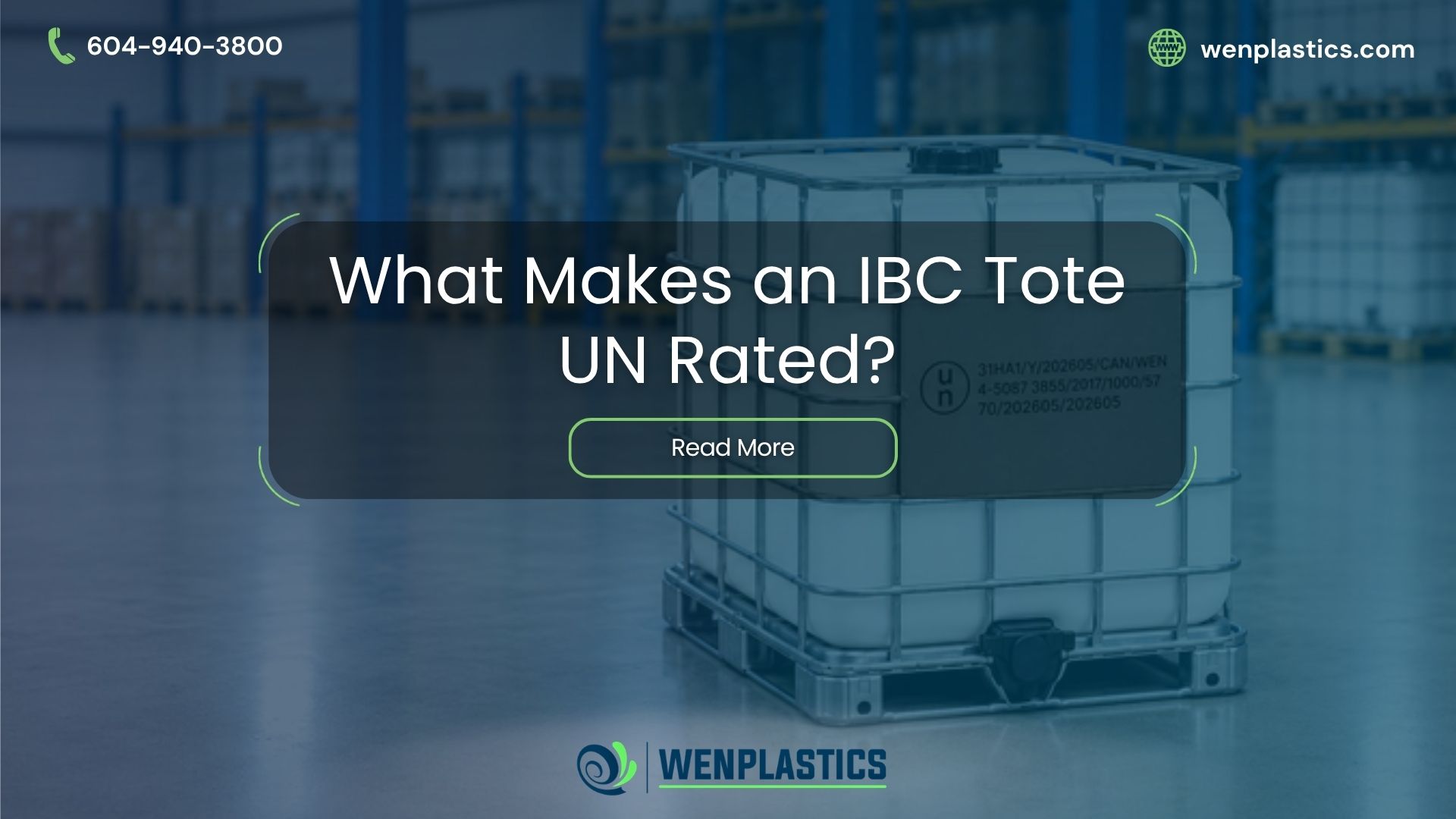
What Makes an IBC Tote UN Rated?
Intermediate Bulk Containers (IBCs), commonly known as IBC totes, are widely used across industries for storing and transporting liquids, chemicals, and other industrial materials. However, when transporting dangerous goods, not every IBC tote meets the necessary safety and regulatory requirements.
This is where UN-rated IBC totes become essential.
UN-rated IBC totes are designed, manufactured, and tested to meet specific international packaging standards for transporting dangerous goods. Understanding what makes an IBC tote UN rated can help businesses choose the right container, improve transportation safety, and meet regulatory requirements.
What Does UN Rated Mean for an IBC Tote?
A UN-rated IBC tote is a container manufactured according to internationally recognized packaging standards established under the United Nations Recommendations on the Transport of Dangerous Goods.
These standards establish requirements for container design, construction, testing, and performance to help ensure that IBC totes can safely withstand the conditions associated with transporting regulated materials.
In Canada, UN-rated IBC totes must meet applicable requirements under the Transportation of Dangerous Goods (TDG) Regulations and the CAN/CGSB-43.146 standard.
Unlike standard IBC totes, UN-rated containers are manufactured according to a registered design that has successfully completed the required performance tests.
How Are IBC Totes Tested for UN Certification?
To qualify as UN-rated packaging, an IBC tote design must undergo a series of performance tests. These tests evaluate whether the container can withstand various conditions during transportation, handling, and storage.
1. Drop Testing
Drop testing evaluates how well an IBC tote withstands impacts that may occur during transportation or handling.
The container is dropped from a specified height under controlled conditions to assess its structural integrity and ability to retain its contents.
This test helps determine whether the container can withstand accidental impacts without leaking or suffering damage that compromises its performance.
2. Stacking Tests
IBC totes are frequently stacked during storage and transportation. Stacking tests assess whether the container can withstand the weight of other containers placed above it.
These tests evaluate the strength of the IBC’s structural components, including its metal cage and pallet base.
A properly rated IBC must withstand its specified stacking test load without compromising the container’s integrity.
3. Leakproofness Testing
Leakproofness testing evaluates whether an IBC tote can prevent leaks under specified test conditions.
This is particularly important for containers designed to transport hazardous liquids, where leakage could create safety risks or environmental contamination.
The test helps verify the integrity of the inner bottle and its closure system.
4. Hydraulic Pressure Testing
Hydraulic pressure testing evaluates an IBC tote’s ability to withstand internal pressure.
This test is particularly important for containers used to transport liquids that may generate pressure during transportation.
The container must withstand the required pressure without leaking or experiencing structural failure.
5. Vibration Testing
During transportation, IBC totes may experience continuous vibrations caused by trucks, handling equipment, and other transportation conditions.
Vibration testing simulates these movements to evaluate whether the container and its closure system can maintain their integrity.
6. Lifting Tests
IBC totes are designed for mechanical handling, often using forklifts or other lifting equipment.
Lifting tests evaluate whether the container can safely support its intended load during handling and transportation.
Together, these tests help ensure that UN-rated IBC totes meet established packaging performance standards.
Understanding UN Markings on IBC Totes
UN-rated IBC totes carry identification markings that provide important information about their design, manufacturing details, and tested performance.
For example, a common UN marking for a composite IBC tote begins with:
UN 31HA1 / Y
Example of a UN packaging classification
Here’s what these markings mean:
- UN: Identifies packaging manufactured according to an applicable UN standard.
- 31: Indicates an IBC designed for transporting liquids.
- H: Identifies the rigid plastic inner container.
- A: Represents the steel outer structure or cage.
- 1: Indicates a rigid plastic inner receptacle.
- Y: Identifies packaging tested for Packing Groups II and III.
A complete UN marking also includes additional information, such as the manufacturing date, country code, manufacturer identification, stacking test load, and maximum permissible gross mass.
These markings help businesses determine whether an IBC tote is suitable for their transportation requirements.
Why Are UN-Rated IBC Totes Important?
Choosing the appropriate UN-rated IBC tote provides several advantages for businesses handling industrial chemicals and other regulated materials.
Improved Transportation Safety
UN-rated IBC totes are designed and tested to withstand specified transportation conditions, helping reduce the risk of leaks, spills, and container failures.
Regulatory Compliance
Businesses transporting dangerous goods must comply with applicable packaging and transportation regulations. Using appropriately rated IBC totes helps support these requirements.
Reliable Product Protection
The tested construction of UN-rated IBC totes helps protect their contents during handling, storage, and transportation.
Reduced Environmental Risks
By helping prevent accidental leaks and spills, properly selected and maintained UN-rated IBC totes can reduce the risk of environmental contamination.
Are All IBC Totes UN Rated?
No. Although standard IBC totes and UN-rated IBC totes may look similar, they do not necessarily meet the same performance and regulatory requirements.
Standard IBC totes may be suitable for storing and transporting non-regulated materials, including water and various industrial liquids.
UN-rated IBC totes, however, are manufactured according to approved designs that meet specific performance requirements for dangerous goods transportation.
It is also important to understand that a UN rating does not automatically make an IBC tote suitable for every hazardous substance. Businesses must consider chemical compatibility, packing group requirements, the container’s weight limits, and applicable transportation regulations.
Do UN-Rated IBC Totes Need Recertification?
UN-rated IBC totes used for dangerous goods transportation may require periodic inspections and testing to remain compliant.
In Canada, applicable UN standardized IBCs for liquids generally require leakproofness testing and inspection every 30 months at a Transport Canada-registered facility.
Plastic and composite IBCs are also subject to service-life limitations and other requirements under applicable standards.
Businesses using reconditioned or previously used IBC totes should verify the container’s condition, inspection status, test dates, and suitability before transporting dangerous goods.
Choosing the Right UN-Rated IBC Tote
Before purchasing a UN-rated IBC tote, businesses should evaluate several important factors, including:
- Material compatibility: Ensure the plastic bottle, seals, valves, and other components are compatible with the intended contents.
- UN classification: Verify that the container meets the required packing group and packaging specifications.
- Container capacity: Choose the appropriate capacity, commonly 1,000 L (275 gallons) or 1,200 L (approximately 317 US gallons).
- Structural condition: Inspect the cage, pallet, bottle, and valves for damage or deterioration.
- Testing and inspection: Confirm that applicable inspections and periodic tests are current.
Selecting the appropriate IBC tote helps businesses maintain safer operations while meeting their transportation and packaging needs.
UN-Rated IBC Totes from Wenplastics
At Wenplastics, we manufacture industrial IBC totes designed to support a wide range of packaging and transportation applications.
As a Canadian IBC tote manufacturer, we focus on product quality, consistent manufacturing processes, and reliable packaging solutions for businesses across different industries.
Our product range includes brand-new, rebottled, and reconditioned IBC totes, with UN-rated options available for applications requiring compliant dangerous goods packaging.
Whether your business requires IBC totes for industrial liquids, chemical handling, or transportation, our team can help you explore suitable packaging options.
Looking for reliable UN-rated IBC totes? Contact Wenplastics to learn more about our products, specifications, and available options.

No responses yet