
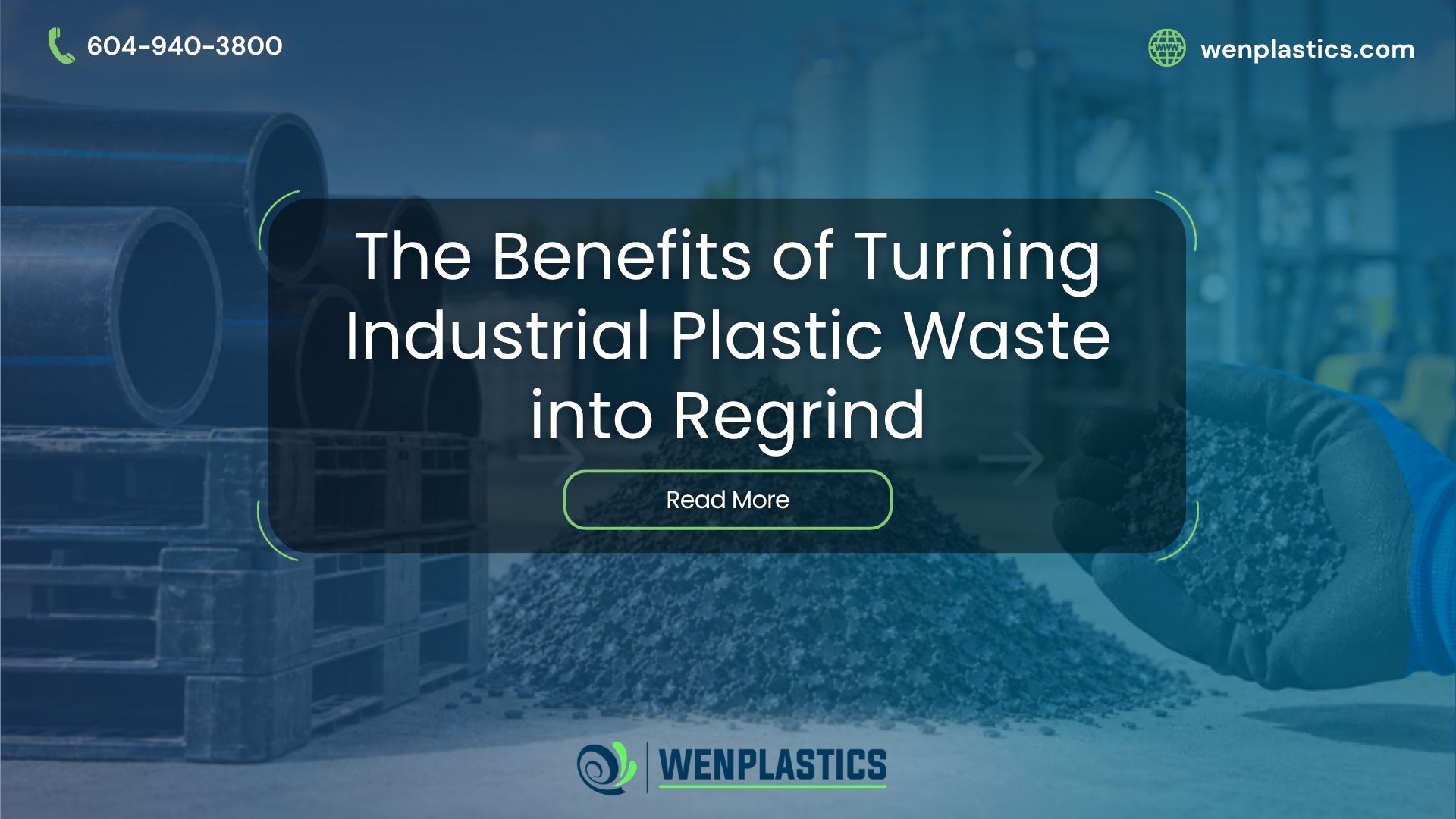
The Benefits of Turning Industrial Plastic Waste into Regrind
Industrial plastic does not necessarily lose its value when a product reaches the end of its original use.
Plastic pipes, pallets, packaging components, production scrap, and other rigid plastic products can often be recovered and processed into plastic regrind, allowing the material to return to manufacturing instead of being treated simply as waste.
For businesses, recycling industrial plastic can support better waste management, recover value from usable materials, and contribute to a more circular supply chain. The benefits can also extend beyond the individual company to manufacturers, communities, and waste-management systems.
Here is why turning industrial plastic waste into regrind can be a valuable alternative to disposal.
What Is Plastic Regrind?
Plastic regrind is recycled plastic that has been mechanically processed into smaller pieces so it can be used again as a manufacturing raw material.
Depending on the recycling stream, the process may include:
- Collection
- Material sorting
- Removal of non-plastic components
- Cleaning
- Inspection
- Grinding or size reduction
- Quality evaluation
The result is a secondary raw material that can be introduced into suitable manufacturing applications.
Instead of ending the material’s useful life, regrind gives plastic an opportunity to enter another production cycle.
1. It Keeps Useful Material Out of the Waste Stream
One of the most direct benefits of recycling industrial plastic is reducing the amount of usable material sent for disposal.
When a recyclable plastic pipe, pallet, or industrial component is discarded, the remaining material value is lost.
When it is recovered and processed into regrind, the plastic can continue to serve as a manufacturing resource.
This is especially important for durable plastics such as HDPE and PP, which are commonly used in industrial products and can be mechanically recycled when the material is suitable.
2. It Helps Businesses Reduce Industrial Waste
Manufacturing and industrial operations can generate significant quantities of plastic waste.
This may include:
- Offcuts
- Production scrap
- Damaged plastic products
- End-of-life pallets
- Pipes
- Containers
- Other rigid plastic components
Without a recovery program, these materials can quickly accumulate and become a waste-management problem.
Separating recyclable plastic from general waste gives businesses another option.
Instead of treating all discarded material the same way, companies can identify plastic streams that still have recycling value and direct them toward recovery.
3. It Can Recover Value from Materials That Would Otherwise Be Discarded
Industrial plastic waste is not always worthless.
Clean, properly identified plastic can have value as recycling feedstock.
By separating suitable materials and working with a recycling partner, businesses may be able to recover value from plastic that would otherwise be managed only as waste.
The exact economics depend on factors such as:
- Resin type
- Material condition
- Cleanliness
- Volume
- Contamination
- Transportation
- Market demand
The important distinction is that recyclable industrial plastic can represent a material resource, not just a disposal cost.
4. Regrind Can Reduce Dependence on Virgin Resin
Plastic manufacturing traditionally relies on virgin resin produced from new raw materials.
Recycled regrind provides an alternative source of plastic for applications where recycled material meets the required specifications.
Depending on the product and manufacturing process, regrind may be used alone or blended with virgin resin.
Using recovered material can help reduce the amount of virgin plastic required for certain applications while keeping existing plastic in circulation for longer.
This does not mean regrind is appropriate for every product.
Material requirements, performance standards, regulatory requirements, colour, consistency, and product-contact considerations all need to be evaluated before recycled plastic is introduced into production.
5. It Supports a More Circular Manufacturing System
A traditional linear model looks something like this:
Raw Material → Manufacturing → Product → Use → Disposal
Recycling creates the possibility of a different path:
Raw Material → Manufacturing → Product → Use → Recovery → Regrind → New Product
The material does not remain in a closed loop indefinitely, and some losses can occur during recycling and manufacturing.
However, recovering usable plastic extends the period during which the material provides productive value.
This is one of the basic principles behind a more circular approach to manufacturing.
6. It Can Help Companies Work Toward Waste-Reduction Goals
Many businesses are looking for practical ways to reduce waste within their operations.
Industrial plastic recovery can be one part of that strategy.
Instead of focusing only on reducing plastic purchases, companies can also improve what happens to materials after use.
A structured recycling program can help businesses:
- Separate recoverable materials
- Track plastic waste streams
- Reduce material sent to disposal
- Improve internal waste-management practices
- Support recycled-content manufacturing
- Identify opportunities for material reuse
This can turn recycling from an occasional activity into part of a broader material-management strategy.
7. It Reduces Pressure on Waste-Management Infrastructure
The benefits of industrial recycling extend beyond individual businesses.
When recyclable materials are separated from general waste, less material needs to move through disposal systems.
At scale, diverting recyclable industrial plastics can reduce pressure on:
- Waste collection systems
- Transfer facilities
- Landfill capacity
- Other disposal infrastructure
Not every plastic product is recyclable, and recycling systems still require energy, transportation, and processing.
However, directing suitable material toward recycling can make better use of existing resources than discarding recyclable plastic without attempting recovery.
8. It Can Support Local Recycling and Manufacturing Activity
Industrial plastic recycling creates activity at several points in the supply chain.
Materials need to be:
- Collected
- Transported
- Sorted
- Cleaned
- Processed
- Evaluated
- Supplied back to manufacturers
When these activities happen regionally, more of the material-management process can remain within the local manufacturing economy.
For companies sourcing recycled material, proximity to a recycling processor can also simplify communication, transportation, and supply planning.
9. Clean Feedstock Can Produce More Consistent Regrind
Not all recycled plastic has the same quality.
The condition of the incoming material plays a major role in the consistency of the final regrind.
Contaminants such as:
- Oil
- Chemicals
- Dirt
- Metal
- Mixed plastics
- Residual products
can affect the recycled material and limit its potential applications.
This is why sorting and cleaning are critical parts of the recycling process.
At Wenplastics, selected recycling streams use materials such as plastic pipes and pallets that have not been in contact with oils or chemicals. These materials also go through a thorough cleaning process before grinding to help reduce contamination from dirt and residues.
Starting with cleaner feedstock helps create more consistent recycled material for future manufacturing applications.
10. Regrind Can Become Feedstock for New Products
The recycling process creates value when recovered material returns to manufacturing.
Plastic regrind can be used in suitable applications to manufacture new products.
Depending on the resin type and material specifications, recycled plastic may be used in products such as:
- Plastic pipes
- Landscaping products
- Industrial components
- Pallets
- Construction products
- Other durable plastic goods
The exact application depends on the properties and quality of the recycled material.
This is why controlling the recycling process matters.
Better sorting, cleaning, and material consistency can create more opportunities for the regrind to return to productive use.
Benefits for Different Parts of the Community
Industrial plastic recycling can create value at several levels.
For Businesses
Companies can reduce waste, improve material recovery, and potentially recover value from recyclable plastic streams.
For Manufacturers
Regrind provides another source of raw material for applications that can incorporate recycled plastic.
For Waste-Management Systems
Diverting suitable plastics from disposal can reduce the amount of material moving through landfill and other waste infrastructure.
For Communities
Keeping materials in productive use can support recycling activity, manufacturing supply chains, and more efficient use of existing resources.
For the Environment
Using plastic for additional manufacturing cycles can reduce unnecessary disposal and, in suitable applications, reduce demand for new virgin resin.
Recycling Is Not Just About the Final Grinding Step
It is easy to think of plastic recycling as simply putting material into a grinder.
In reality, the quality of the final regrind depends heavily on everything that happens beforehand.
Effective industrial recycling includes:
Material Selection → Sorting → Cleaning → Inspection → Grinding → Quality Evaluation → Reuse
Each stage helps determine whether the recycled material will be suitable for another manufacturing application.
A clean, well-controlled recycling stream can create significantly more value than mixed or heavily contaminated plastic waste.
From Industrial Waste to Manufacturing Resource
The biggest difference between disposal and recycling is what happens to the material next.
When suitable industrial plastic is discarded, its useful life ends.
When it is recovered, cleaned, and processed into regrind, the material has an opportunity to become part of a new product.
That shift—from waste to raw material—is what makes industrial plastic recycling valuable for businesses, manufacturers, and the broader material economy.
Industrial Plastic Recycling at Wenplastics
Wenplastics works with industrial plastic materials including HDPE and PP, processing suitable recovered plastics into regrind for new manufacturing applications.
Through material selection, sorting, cleaning, processing, and quality control, recyclable plastic can be prepared for another productive use instead of being treated simply as waste.
If your business generates plastic pipes, pallets, production scrap, or other industrial plastic materials, contact Wenplastics to discuss the material type, condition, volume, and recycling requirements.

No responses yet