
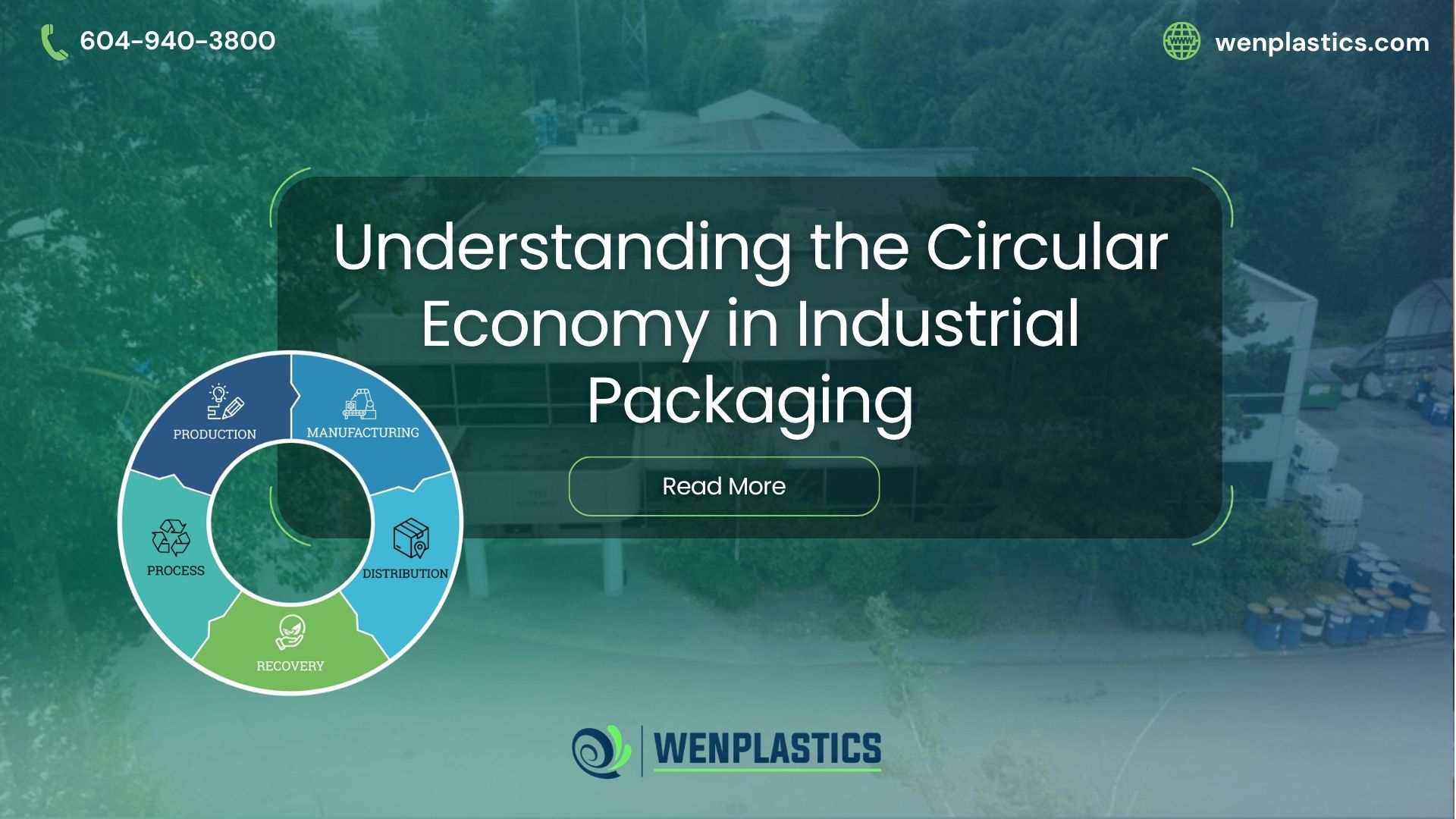
Understanding the Circular Economy in Industrial Packaging
Sustainability is becoming a requirement across industries in Canada and beyond. As regulations evolve and companies look for more efficient ways to operate, the concept of the circular economy is gaining momentum.
But what does it actually mean in the context of industrial packaging?
For businesses that rely on products like IBC totes, plastic pails, and drums, understanding the circular economy is key to reducing costs, improving sustainability, and staying competitive.
What Is the Circular Economy?
The circular economy is a model designed to minimize waste and make the most of resources.
Instead of the traditional linear system:
Take → Make → Dispose
The circular model focuses on:
Reduce → Reuse → Recycle
This approach keeps materials in use for as long as possible, extracting maximum value before recovering and regenerating them at the end of their lifecycle.
Linear vs Circular Packaging Systems
Linear Model
- Raw materials are extracted
- Products are manufactured
- Used once and discarded
- Ends in landfill or waste
Circular Model
- Materials are designed for reuse
- Products are repaired, reused, or reconditioned
- Materials are recycled into new products
- Waste is minimized
In industrial packaging, this shift is already happening — and accelerating.
How Circular Economy Applies to Industrial Packaging
Industrial plastic containers are a perfect example of how circular systems work in practice.
1. Reuse: Reconditioned IBC Totes
Used IBC totes are professionally cleaned, inspected, and restored for reuse.
This extends the product’s life and reduces the need for new raw materials.
2. Reuse + Performance: Rebottled IBC Totes
Rebottled totes combine a new HDPE bottle with a reconditioned steel cage, offering a balance between safety and sustainability.
This is one of the most efficient circular solutions available today.
3. Recycling: Plastic Regrind
At the end of their lifecycle, plastic containers can be processed into HDPE or PP regrind, which is then used as raw material for manufacturing new products.
This closes the loop and reduces industrial plastic waste.
Real-World Example: Circular Economy in Action
Large-scale infrastructure projects across Canada generate significant amounts of plastic waste — such as decommissioned HDPE pipes.
Instead of sending these materials to landfill, they can be:
- Collected and processed
- Recycled into regrind
- Reused in manufacturing
This transformation turns waste into a valuable resource and supports a more sustainable supply chain.
Benefits for Businesses
Adopting circular practices in industrial packaging is not just about sustainability — it’s also a smart business decision.
Cost Efficiency
Reconditioned and rebottled containers are often more affordable than new ones.
Reliable Supply
Local recycling and reconditioning reduce dependence on global supply chains.
Environmental Impact
Lower carbon footprint by reducing raw material extraction and waste.
Regulatory Compliance
With Extended Producer Responsibility (EPR) programs expanding in Canada, circular solutions help businesses stay compliant.
Why It Matters in Canada (2026 and Beyond)
Canada is moving toward stricter environmental regulations, especially with the expansion of EPR programs across provinces like BC, Ontario, and Quebec.
This means:
- Greater responsibility for waste management
- Increased pressure to adopt sustainable practices
- Higher demand for circular solutions
Businesses that adapt early will have a competitive advantage.
Final Thoughts
The circular economy is a practical and necessary shift in how industries operate.
In industrial packaging, solutions like reconditioned containers, rebottled IBC totes, and plastic regrind are already making a measurable impact. Companies that embrace these strategies can reduce costs, improve sustainability, and future-proof their operations.
Looking for circular solutions for your industrial packaging needs?
Wenplastics offers:
- New, rebottled, and reconditioned IBC totes
- High-quality plastic pails and containers
- HDPE and PP regrind solutions
👉 Contact our team today to find the right solution for your business.

Comments are closed