
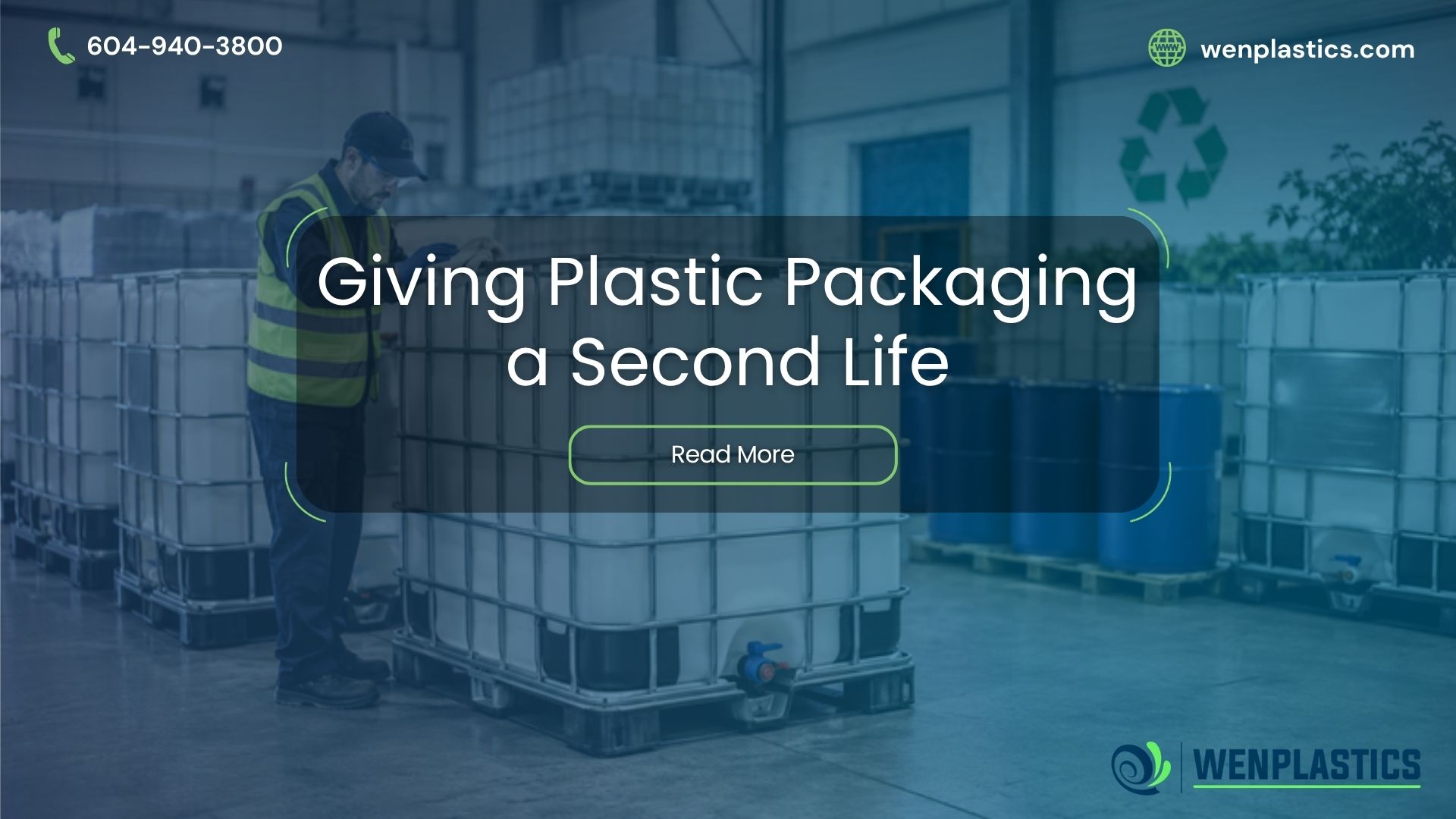
Giving Plastic Packaging a Second Life
Plastic packaging plays an important role in many industries, helping businesses store, transport, and handle products safely and efficiently. From IBC totes to plastic drums, these containers are used every day in manufacturing, agriculture, chemicals, cleaning products, food production, and many other sectors.
But what happens when these containers have already been used once?
In many cases, plastic packaging can be reconditioned, rebottled, reused, or recovered instead of being sent directly to landfill. This gives valuable plastic packaging a second life and supports a more practical approach to sustainability.
At Wenplastics, giving plastic packaging a second life is part of how we help businesses reduce waste, extend the value of their packaging, and support a more circular use of plastic materials.
What Does It Mean to Give Plastic Packaging a Second Life?
Giving plastic packaging a second life means finding ways to reuse, recondition, repair, or recover containers after their first use.
Instead of treating every used container as waste, businesses can look at whether it can be safely used again for another suitable application.
This may include:
- Reconditioning used IBC totes
- Rebottling IBC totes with new inner bottles
- Reconditioning plastic drums
- Replacing damaged parts
- Cleaning and preparing containers for reuse
- Recovering plastic materials for reprocessing
- Recycling containers that cannot be reused safely
The goal is simple: keep useful packaging materials in circulation for as long as possible, while still choosing the right container for the right application.
Why Reconditioning Matters
Plastic packaging is designed to be strong, durable, and practical. IBC totes and plastic drums are made to handle demanding industrial and commercial environments, which means many containers may still have value after their first use.
Reconditioning helps businesses make better use of these materials.
Instead of always purchasing brand-new packaging, companies may be able to choose a reconditioned or rebottled option for certain applications. This can help reduce waste, lower packaging costs, and support sustainability goals.
Reconditioning is especially useful for applications where a container does not need to be brand new or food-grade, but still needs to be reliable, functional, and suitable for the product being stored or transported.
Reconditioned IBC Totes
IBC totes are widely used for bulk liquid storage and transport. They are common in industries such as chemicals, agriculture, food and beverage, cleaning products, water treatment, manufacturing, and industrial supply.
A standard IBC tote includes an inner plastic bottle, a metal cage, a pallet base, a top lid, and a discharge valve. Because IBC totes are built for durability, some components may be reusable after the original contents have been emptied.
Reconditioned IBC totes are used IBC totes that have been inspected, cleaned, and prepared for reuse in suitable applications.
Depending on the condition of the tote and the intended use, the process may include cleaning the bottle, checking the cage and pallet, inspecting the valve, replacing damaged parts, and confirming that the tote is suitable for its next application.
Reconditioned IBC totes can be a practical choice for many non-food-grade and industrial uses, including:
- Waste collection
- Industrial liquids
- Cleaning products
- Non-potable water
- Agriculture applications
- Construction materials
- Recycling and recovery operations
- General storage and handling
However, not every used tote is suitable for every product. For food-grade products, potable water, or direct food and beverage contact, businesses often require a brand-new bottle or a certified food-grade option.
Rebottled IBC Totes
Another way to give IBC packaging a second life is through rebottling.
A rebottled IBC tote uses a new inner bottle with a used cage and pallet. This option allows businesses to benefit from a new plastic bottle while reusing the outer structure of the tote.
This can be a strong option for businesses that need a cleaner container solution while still supporting material reuse.
Rebottled IBC totes are especially useful when the cage and pallet are still in good condition, but the inner bottle needs to be replaced. By reusing the cage and replacing the bottle, businesses can reduce unnecessary waste while still getting a reliable packaging solution.
For many customers, rebottled totes offer a balance between performance, cleanliness, and sustainability.
Reconditioned Plastic Drums
Plastic drums, also known as poly drums, are another type of packaging that can often be reconditioned for suitable applications.
Plastic drums are commonly used for chemicals, cleaning products, food ingredients, agriculture products, industrial liquids, powders, and waste collection. Because they are durable and resistant to rust and moisture, they can be valuable packaging assets even after their first use.
Reconditioned plastic drums may be inspected, cleaned, and prepared for reuse depending on their previous contents, condition, and intended application.
Common uses for reconditioned plastic drums may include:
- Industrial storage
- Waste handling
- Cleaning and sanitation products
- Agricultural materials
- Non-food-grade liquids
- Manufacturing supplies
- Recycling operations
- Maintenance products
As with IBC totes, product compatibility is important. A reconditioned drum should only be used when it is suitable for the material being stored. For food-grade or regulated applications, businesses should confirm whether a new, food-grade, or UN-rated drum is required.
Choosing the Right Packaging Option
Not every application needs the same type of container. Some products require brand-new packaging, while others can safely use reconditioned or rebottled options.
Before choosing between new, rebottled, or reconditioned packaging, businesses should consider:
- What product will be stored or transported
- Whether the product is food-grade or non-food-grade
- Whether the product is hazardous or regulated
- Whether UN-rated packaging is required
- The condition of the container
- The previous contents of the container
- Cleaning and handling requirements
- Storage and transportation conditions
For example, a food ingredient may require a brand-new food-grade container, while a non-food industrial product may be suitable for a reconditioned IBC tote or plastic drum.
Choosing the right packaging helps protect the product, support safety, and avoid unnecessary waste.
Sustainability Benefits of Reconditioned Packaging
Reconditioning plastic packaging supports sustainability by extending the life of existing materials.
When IBC totes and plastic drums are reused, fewer containers need to be produced from new materials. This helps reduce waste and supports more responsible resource use.
Reconditioned packaging can also help businesses reduce their environmental footprint by keeping usable containers in circulation longer.
Some of the sustainability benefits include:
- Less plastic packaging waste
- Reduced need for new raw materials
- Longer container life cycles
- Support for circular economy practices
- Better use of existing packaging resources
- More responsible end-of-life handling
For businesses looking to improve sustainability in their operations, reconditioned and rebottled packaging can be a practical step forward.
When Packaging Cannot Be Reused
Not every container can or should be reused.
If an IBC tote or plastic drum is damaged, contaminated, incompatible, or no longer safe for handling, it may need to be recycled or processed through another recovery method.
This is why inspection and proper sorting are important. Reconditioning should focus on containers that are suitable for reuse, while containers that are not reusable should be handled responsibly.
Plastic recovery helps ensure that even containers at the end of their useful life can still contribute value through recycling or reprocessing when possible.
How Wenplastics Supports Plastic Packaging Recovery
Wenplastics helps businesses across Canada and the US with practical plastic packaging solutions, including IBC totes, plastic drums, plastic pails, and plastic recovery.
Based in Delta, British Columbia, Wenplastics works with businesses that need reliable packaging for industrial, agricultural, food-grade, chemical, and manufacturing applications.
Our solutions include new, rebottled, and reconditioned packaging options, depending on the customer’s needs and the intended use.
By helping give plastic packaging a second life, Wenplastics supports businesses that want packaging solutions that are practical, cost-effective, and more sustainable.
Final Thoughts
Giving plastic packaging a second life is an important part of reducing waste and making better use of valuable materials.
Reconditioned IBC totes, rebottled IBC totes, and reconditioned plastic drums can offer practical solutions for many industries, especially when brand-new packaging is not required.
The key is choosing the right container for the right application.
For businesses looking for IBC totes, plastic drums, plastic pails, or plastic recovery solutions, Wenplastics can help provide packaging options that support everyday operations while giving plastic materials a longer useful life.

Comments are closed