
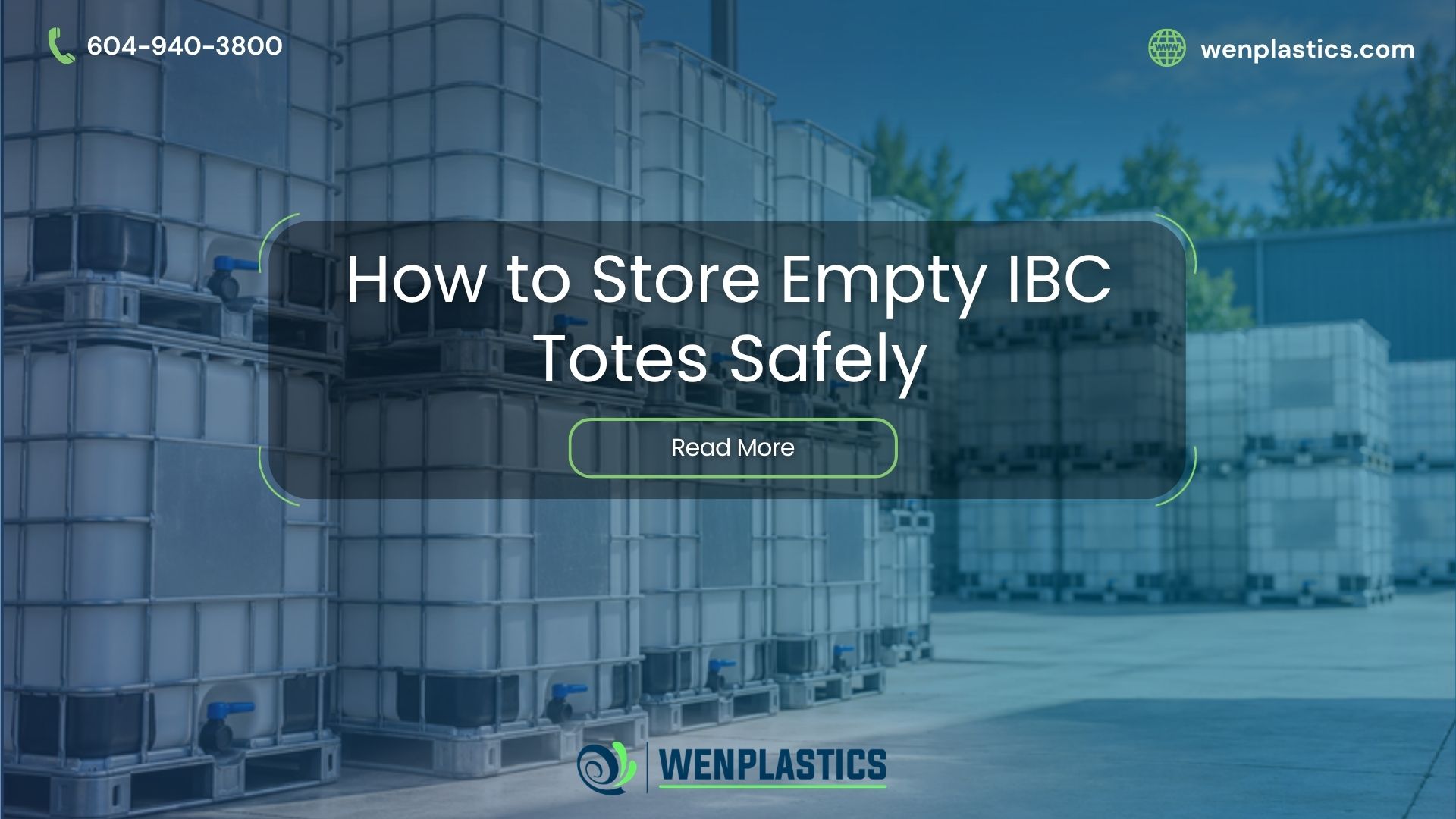
How to Store Empty IBC Totes Safely
Empty IBC totes may weigh much less than filled containers, but they still require proper storage and handling.
Poorly stored totes can become unstable, suffer damage from weather or forklifts, block warehouse access, or create risks if residual product remains inside the container.
Whether your business plans to reuse, return, refurbish, or recycle its IBC totes, proper storage can help protect the container and make future handling easier.
Here are some important practices to consider when storing empty IBC totes.
1. Make Sure the Tote Is Actually Empty
An IBC tote that appears empty may still contain residual liquid, vapour, or material inside the bottle, valve, or bottom outlet.
Before placing a tote into storage, confirm that it has been properly drained according to the requirements of the previous product.
This is especially important when the tote previously contained:
- Chemicals
- Oils
- Cleaning products
- Solvents
- Food ingredients
- Other regulated or sensitive materials
Unless the container has been properly cleaned or decontaminated, it should still be handled according to the requirements associated with its previous contents.
Never assume that an empty-looking container is automatically safe.
2. Keep Valves and Closures Secure
After draining the tote, check the valve, top opening, caps, and other closures.
Whenever appropriate for the previous contents and storage procedure, make sure components are:
- Properly closed
- Protected from impact
- Free from visible damage
- Kept with the correct container
Leaving valves exposed can make them more vulnerable to forklift contact, dirt, moisture, or accidental damage.
Protecting these components can also make inspection and reuse easier later.
3. Store IBC Totes on a Flat, Stable Surface
IBC totes should be stored on a solid and level surface.
Uneven ground can cause containers to lean, shift, or become unstable, especially when multiple totes are stored together.
Suitable storage surfaces may include:
- Concrete floors
- Level warehouse areas
- Prepared outdoor storage pads
- Other stable surfaces designed for industrial loads
Avoid placing IBC totes directly on soft, uneven, or unstable ground where the pallet could sink or tilt.
4. Follow the Manufacturer’s Stacking Guidelines
Empty IBC totes are often stackable, but the number of containers that can be safely stacked depends on the tote design and manufacturer specifications.
Do not assume that every IBC can be stacked to the same height.
Before stacking, consider:
- IBC model
- Pallet design
- Cage condition
- Whether the totes are truly empty
- Surface stability
- Indoor or outdoor storage
- Manufacturer stacking instructions
Never exceed the approved stacking configuration for the specific container.
Even empty totes can create significant risk if a stack becomes unstable.
5. Inspect the Cage and Pallet Before Stacking
An IBC with structural damage should not simply be placed at the bottom of a stack.
Before storage, inspect the tote for issues such as:
- Bent cage sections
- Broken welds
- Significant corrosion
- Damaged pallet supports
- Cracked base components
- Deformation
- Missing structural parts
The pallet and cage help support the tote and maintain stability.
If either is significantly damaged, the container should be evaluated before stacking or reuse.
6. Keep Stacks Straight and Aligned
IBC totes should sit squarely on top of one another when stacked.
The base of the upper tote should align correctly with the tote beneath it.
Avoid:
- Offset stacking
- Leaning stacks
- Mixing incompatible pallet designs
- Placing damaged totes within a stack
- Creating uneven storage rows
A neatly aligned stack is easier to inspect, move, and manage.
7. Protect Empty Totes From Forklift Traffic
Warehouses and industrial yards often have frequent forklift movement.
Empty IBC totes should be stored in a designated area where they are less likely to be struck by equipment.
Whenever possible:
- Keep storage areas away from high-traffic routes
- Maintain clear aisles
- Use barriers or designated zones where appropriate
- Avoid leaving individual totes in loading paths
- Make sure operators have sufficient visibility around stored containers
Forklift impacts can damage the bottle, cage, valve, or pallet even when the tote is empty.
8. Secure Outdoor IBC Totes Against Wind
An empty IBC tote is significantly lighter than filled containers.
This means outdoor storage conditions can create risks that do not exist when the tote is full.
Strong winds may shift, move, or destabilize improperly stored empty containers.
Outdoor stacks should therefore be positioned and secured according to site conditions and applicable safety procedures.
Avoid storing empty totes loosely in exposed areas where severe weather could move them.
9. Limit Unnecessary UV and Weather Exposure
IBC totes are often used outdoors, but prolonged exposure to sunlight and harsh weather can contribute to wear over time.
UV radiation can gradually affect the HDPE bottle, while moisture can contribute to corrosion on metal components.
Whenever possible, empty totes awaiting reuse should be stored:
- Indoors
- Under cover
- Away from prolonged direct sunlight
- Protected from standing water
- Away from unnecessary temperature extremes
This becomes particularly important if the containers will remain in storage for an extended period.
10. Keep the Storage Area Organized
Separating IBC totes by status can make warehouse operations much easier.
For example, consider creating designated areas for:
- Ready for reuse
- Awaiting inspection
- Awaiting cleaning
- Damaged
- Scheduled for refurbishment
- Scheduled for recycling
Clear identification can help prevent a damaged or uninspected tote from accidentally returning to service.
It also makes inventory easier to manage.
11. Separate Totes Based on Previous Contents
When used IBC totes come from different applications, they should not automatically be grouped together without considering their previous contents.
A container that previously held a food ingredient may need to be managed differently from one used for an industrial chemical.
Businesses should maintain appropriate identification and traceability where necessary.
This can help reduce the risk of:
- Cross-contamination
- Incorrect reuse
- Mixing incompatible residues
- Losing important product-history information
Labels and markings should not be removed simply because the container is empty unless your applicable procedure allows it.
12. Do Not Enter an IBC Tote
IBC totes are not designed to be entered by people.
Even an empty tote can contain hazardous vapours, residual chemicals, or an oxygen-deficient atmosphere depending on its previous contents and cleaning history.
Cleaning, inspection, and maintenance should be performed using appropriate equipment and procedures without entering the container.
13. Keep Empty Totes Away From Ignition Sources When Necessary
The risks associated with an empty IBC depend heavily on what it previously contained.
If the previous product was flammable or capable of producing hazardous vapours, an empty container may still require special handling.
Residual vapours can remain even after most of the liquid has been drained.
Businesses should follow the applicable procedures for the previous product and avoid treating the tote as harmless simply because it is empty.
14. Inspect Totes Before Returning Them to Service
Storage should not be the final step before reuse.
Before an empty IBC is filled again, inspect it for any damage that may have occurred during storage.
Check:
- Inner bottle
- Cage
- Steel or other pallet system
- Valve
- Gaskets
- Top closure
- Labels and markings
- Overall stability
Look for cracks, corrosion, deformation, leaks, or damaged fittings.
A tote that was suitable before storage may not necessarily remain suitable if it was struck, exposed to harsh conditions, or stored improperly.
15. Decide Whether the Tote Should Be Reused, Rebottled, or Recycled
Not every empty IBC needs to return to service in the same condition.
Depending on its condition, the tote may be suitable for:
Reuse
If the bottle, valve, cage, and pallet remain suitable for the intended application, the tote may be prepared for reuse according to the applicable requirements.
Reconditioning
Some used totes can go through cleaning, inspection, and servicing before returning to suitable industrial applications.
Rebottling
If the cage and pallet remain usable but a new product-contact surface is needed, a new HDPE bottle can be installed.
Recycling
When components are no longer suitable for continued use, recoverable plastic and metal materials may be directed toward recycling.
Choosing the right option can help businesses keep useful packaging and materials in circulation instead of disposing of the entire unit unnecessarily.
Why Proper Empty IBC Storage Matters
Empty IBC totes still represent valuable industrial packaging.
Proper storage can help businesses:
- Prevent structural damage
- Reduce accidental valve or cage damage
- Improve warehouse organization
- Make handling safer
- Protect totes intended for reuse
- Preserve components for refurbishment
- Reduce unnecessary packaging waste
A few simple storage practices can make a significant difference in the condition of the tote when it is needed again.
IBC Tote Solutions from Wenplastics
Wenplastics provides brand-new, rebottled, and reconditioned IBC totes, along with refurbishment and industrial plastic recovery solutions.
Proper storage, inspection, and handling can help businesses extend the useful life of their industrial packaging and determine when reuse, rebottling, or recycling is the most appropriate option.
If your business has used IBC totes that need replacement, refurbishment, or recovery, contact Wenplastics to discuss your requirements.

No responses yet