
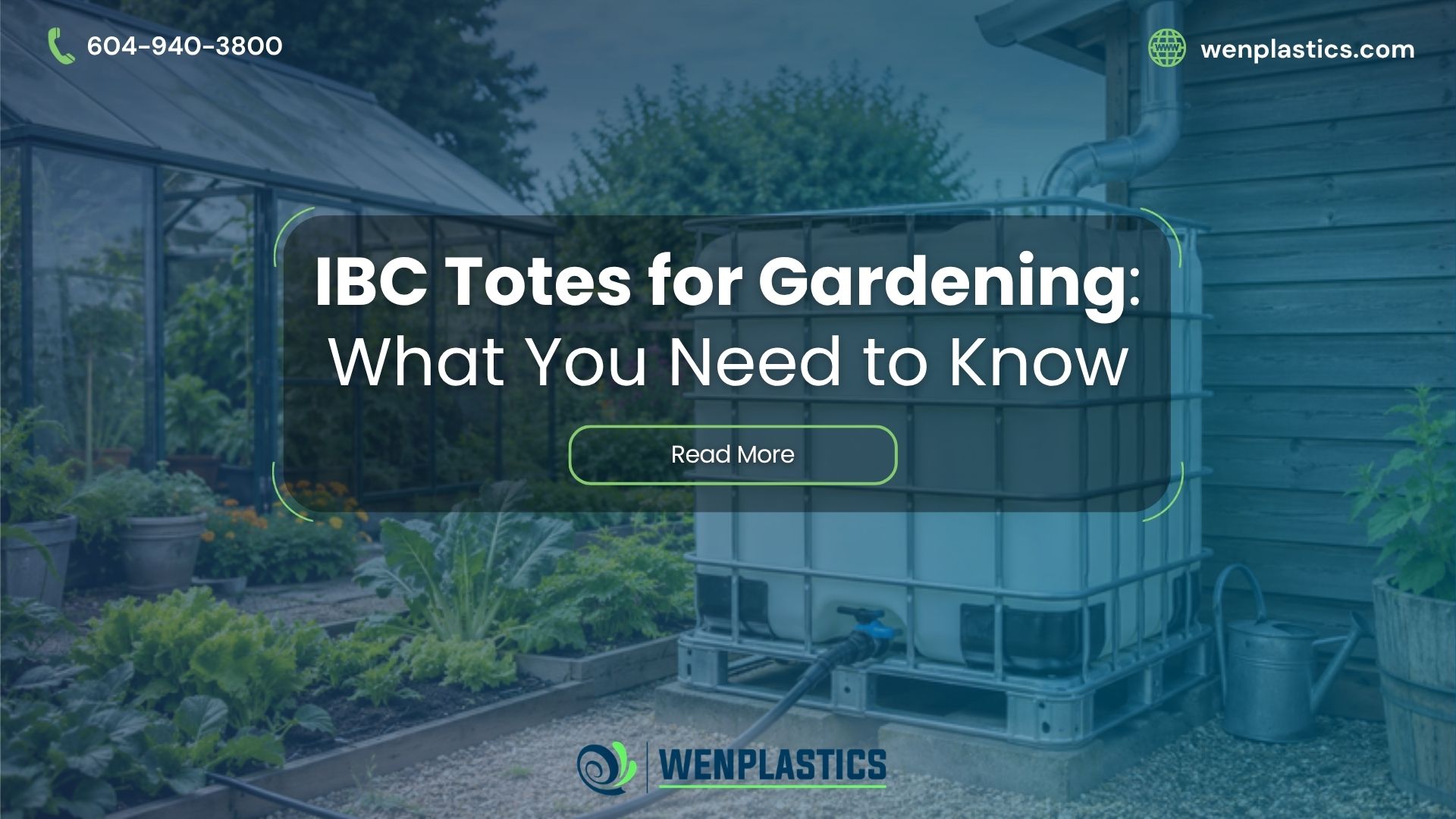
IBC Totes for Gardening: What You Need to Know
IBC totes are commonly used in industrial and commercial settings, but they can also be a practical solution for gardening, landscaping, farms, greenhouses, nurseries, and outdoor water storage. With their large capacity, durable cage structure, and reusable design, IBC totes can help gardeners and businesses store and move water more efficiently.
Whether you are collecting rainwater, watering garden beds, supporting greenhouse operations, or managing irrigation for a larger outdoor space, an IBC tote can be a useful storage option. However, choosing the right tote matters, especially when water quality, previous contents, and safe handling are involved.
What Is an IBC Tote?
An IBC tote, also known as an intermediate bulk container, is a large container used to store and transport liquids and some flowable materials. Most standard IBC totes hold approximately 1,000 litres, or 275 gallons, making them much larger than traditional rain barrels or small water tanks.
A typical IBC tote includes a plastic inner bottle, a protective metal cage, a pallet base, a top opening, and a bottom valve for dispensing. This design makes it easier to store large amounts of liquid while still allowing the tote to be moved with proper equipment.
For gardening, IBC totes are often used for non-potable water storage, rainwater collection, irrigation, and general outdoor water management.
Common Uses of IBC Totes in Gardening
IBC totes can be useful in many gardening and landscaping applications. Some of the most common uses include:
Rainwater Collection
One of the most popular uses for IBC totes in gardening is rainwater collection. Rainwater can be collected from a roof, greenhouse, shed, or other structure and directed into the tote for later use.
This can help reduce reliance on municipal water and provide an extra water source during dry periods. For gardeners with larger outdoor spaces, a 275-gallon tote can store significantly more water than a standard rain barrel.
Garden Irrigation
IBC totes can be connected to hoses, gravity-fed irrigation systems, drip lines, or pumps to help water plants more efficiently. Depending on the layout of the garden, the tote can be elevated to improve water flow or connected to a small pump for better pressure.
This can be helpful for vegetable gardens, flower beds, orchards, greenhouses, farms, and landscaping projects.
Greenhouses and Nurseries
For greenhouses and plant nurseries, IBC totes can provide a reliable water storage solution. They can be used to hold irrigation water, collect runoff, or support watering systems for plants that need regular moisture.
Because greenhouses often require consistent watering, having stored water available can make daily operations easier and more efficient.
Farms and Rural Properties
IBC totes are also commonly used on farms, acreages, and rural properties where water access may be limited or spread across different areas. They can be used to transport water to garden plots, livestock-adjacent areas, orchards, or remote landscaping zones.
For non-potable outdoor use, IBC totes can be a practical and cost-effective option.
Why IBC Totes Are Useful for Gardening
IBC totes offer several advantages for gardening and outdoor water storage.
Large Capacity
A standard IBC tote holds about 275 gallons, which is much more than most residential rain barrels. This makes it useful for gardeners who need a larger water reserve.
Space-Efficient Design
IBC totes are designed to hold a large volume while taking up a relatively small footprint. Their square shape makes them easier to place beside a greenhouse, shed, building, or outdoor storage area.
Durable Cage Protection
The metal cage helps protect the plastic bottle and adds structural support. This is especially useful in outdoor or semi-industrial environments where the tote may be moved, stored, or exposed to regular use.
Easy Dispensing
Most IBC totes have a valve near the bottom, making it easier to dispense water into a hose, bucket, watering can, or irrigation system.
Reusable Format
IBC totes can often be reused for suitable non-potable applications, helping reduce waste and extend the life of the packaging.
Important Safety Considerations
While IBC totes can be very useful for gardening, safety is one of the most important things to consider. Not every tote is suitable for every use.
Know the Previous Contents
Before using an IBC tote for gardening, it is important to know what was previously stored inside it. Totes that previously contained chemicals, solvents, oils, pesticides, or unknown materials should not be used for water that may come into contact with edible plants.
Even if a tote has been washed, residues can remain in the plastic, valve, corners, or gasket areas. For vegetable gardens, herbs, fruit trees, or any sensitive application, it is better to choose a tote with a new bottle or one that is specifically suitable for clean water use.
Use Non-Potable Water Carefully
Rainwater collected in an IBC tote should generally be considered non-potable unless it has been properly filtered, treated, and tested. Roof runoff can contain dirt, bird droppings, debris, chemicals, and other contaminants.
For ornamental plants, lawns, trees, and general landscaping, stored rainwater can be a practical option. For edible gardens, it is better to use extra caution. Avoid spraying collected rainwater directly onto leafy greens, fruits, or vegetables that will be eaten raw. When possible, apply the water directly to the soil and wash produce with clean water before eating.
Keep the Tote Covered
A tote used for rainwater collection should be covered or connected through a screened inlet. This helps reduce debris, leaves, insects, and mosquito breeding.
Standing water can attract pests if the system is not properly sealed or maintained. A secure lid, screen, and overflow setup can help keep the system cleaner and more practical for outdoor use.
Protect the Tote from Sunlight
IBC totes are commonly made with translucent plastic bottles, which can allow sunlight to reach the water. Over time, sunlight can encourage algae growth inside the tote.
To reduce algae, the tote can be placed in a shaded area or covered with a protective wrap, tarp, or enclosure. Keeping light away from stored water can help maintain better water quality for gardening use.
Plan for Overflow
If the tote is connected to a roof or gutter system, it is important to plan for overflow. During heavy rain, a 275-gallon tote can fill quickly. An overflow hose or drainage path can help direct excess water away from buildings, walkways, and foundations.
Make Sure the Tote Is Stable
A full IBC tote is very heavy. Water weighs a lot, and a filled tote should be placed on a strong, level, and stable surface. Avoid soft soil, uneven ground, or unstable platforms.
If the tote is elevated for gravity-fed watering, the support structure must be strong enough to hold the full weight safely.
New, Rebottled, or Reconditioned: Which One Is Best for Gardening?
The best option depends on how the tote will be used.
Brand-New IBC Totes
A brand-new IBC tote is often the best choice when cleanliness and product history are important. Since the bottle has never been used before, it offers more confidence for water storage and sensitive applications.
For gardens with edible plants, greenhouses, nurseries, or situations where the water will be used around food-producing plants, a new tote is usually the safest and cleanest option.
Rebottled IBC Totes
A rebottled IBC tote includes a new plastic bottle inside a used cage. This can be a practical option for businesses or gardeners who want a clean inner bottle while still choosing a more cost-effective and sustainable solution.
Because the bottle is new, rebottled totes are often a strong choice for gardening applications where water quality matters.
Reconditioned IBC Totes
A reconditioned IBC tote has been previously used and then cleaned for reuse. This can be suitable for many industrial or non-sensitive applications, depending on the previous contents and the intended use.
For gardening, reconditioned totes may be appropriate for non-edible landscaping, ornamental plants, construction water, or general outdoor use. However, if the previous contents are unknown or if the water will be used for vegetable gardens, herbs, or food-related applications, a new or rebottled tote is usually a better choice.
Tips for Setting Up an IBC Tote for Gardening
Before using an IBC tote in your garden, consider the following setup tips:
- Place the tote on a flat, stable surface
- Keep the tote close to the water source or gutter system
- Use a screened inlet to reduce debris and insects
- Add an overflow hose for heavy rain
- Keep the tote covered or shaded to reduce algae growth
- Use the bottom valve for easy dispensing
- Consider a pump if you need more water pressure
- Clean and inspect the tote regularly
- Avoid using unknown or chemical-use totes for edible gardens
When an IBC Tote May Not Be the Right Choice
IBC totes are useful, but they are not ideal for every situation. A smaller rain barrel may be enough for a small patio garden or a few containers. An IBC tote is better suited for people or businesses that need a larger water reserve.
Also, IBC totes should not be used for drinking water unless the container, system, filtration, and treatment process are specifically designed for potable water. For most gardening applications, IBC totes are best used for non-potable outdoor water storage.
Choosing the Right IBC Tote Supplier
When using an IBC tote for gardening, it is important to buy from a supplier who can explain the difference between new, rebottled, and reconditioned totes. The right supplier can help you choose a tote based on your application, whether you need it for rainwater collection, irrigation, landscaping, greenhouse use, or general outdoor storage.
A reliable supplier should also help you understand the condition of the tote, the type of bottle, the cage, the valve, and whether the tote is suitable for your intended use.
Wenplastics IBC Tote Solutions
Wenplastics supplies IBC totes for a wide range of applications, including industrial, agricultural, commercial, and outdoor use. Depending on your needs, we can help you choose between brand-new, rebottled, and reconditioned IBC totes.
For gardening, rainwater collection, greenhouse use, or irrigation, choosing the right tote can make a big difference. Our team can help you find a practical solution based on your product, water use, and application requirements.
Final Thoughts
IBC totes can be a practical and efficient solution for gardening, especially when larger water storage is needed. They are commonly used for rainwater collection, irrigation, greenhouse watering, landscaping, and farm applications.
However, not every tote is suitable for every garden. Before choosing an IBC tote, consider the previous contents, the type of water being stored, whether the water will be used near edible plants, and how the tote will be installed.
For the safest and most reliable results, choose an IBC tote that matches your application and work with a supplier who understands the difference between new, rebottled, and reconditioned options.

Comments are closed