
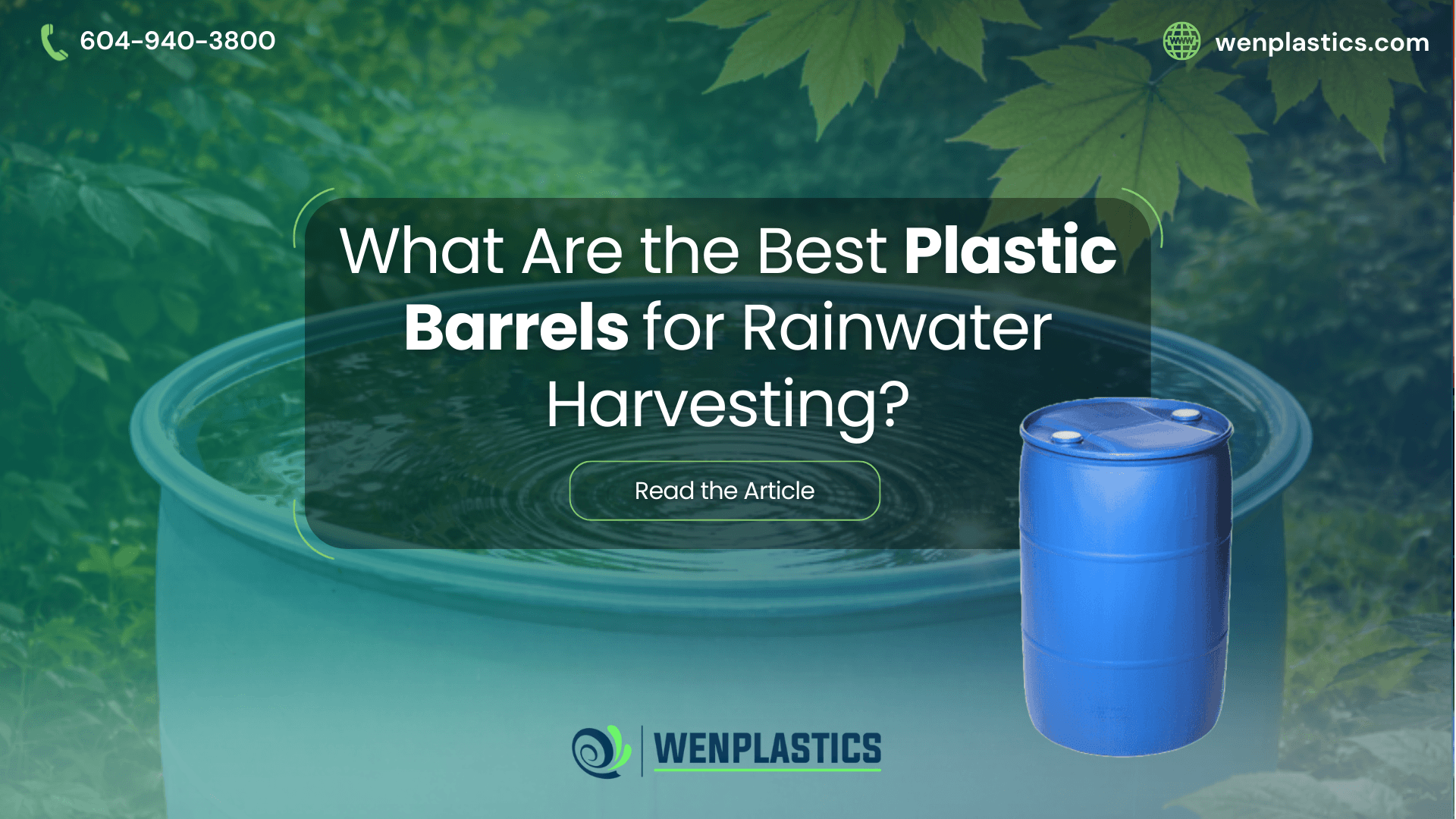
What Are the Best Plastic Barrels for Rainwater Harvesting?
Rainwater harvesting is becoming increasingly popular among homeowners, gardeners, farms, and businesses looking to reduce water consumption and improve sustainability. Collecting rainwater helps conserve municipal water supplies, lower water costs, and provide an additional source of water for irrigation and outdoor use.
One of the most important components of a rainwater collection system is the barrel or storage container used to store the water. Choosing the right type of plastic barrel can significantly affect the durability, safety, and efficiency of the system.
This article explains the best plastic barrels for rainwater harvesting and the key factors to consider when selecting one.
Why Plastic Barrels Are Ideal for Rainwater Collection
Plastic barrels are widely used in rainwater harvesting systems because they are durable, affordable, and easy to install.
Some of the main advantages include:
- Durability: High-quality plastic barrels can withstand outdoor conditions such as rain, sunlight, and temperature changes.
- Lightweight: Plastic containers are easier to transport and install than metal or concrete tanks.
- Cost-effective: Plastic barrels are typically less expensive than other storage solutions.
- Corrosion-resistant: Unlike metal containers, plastic does not rust when exposed to water.
Most rainwater harvesting systems use high-density polyethylene (HDPE) containers because this material is strong, long-lasting, and resistant to chemicals and UV exposure.
1. Food-Grade HDPE Barrels
Food-grade HDPE barrels are one of the best choices for rainwater harvesting.
These barrels are manufactured to store food products or beverages, meaning they are safe and free from harmful contaminants that could affect water quality.
Advantages include:
- Safe material that does not leach chemicals
- Strong and impact-resistant
- Widely available in 55-gallon (200-liter) sizes
- Affordable and commonly available as reused containers
Many DIY rainwater harvesting systems use reconditioned blue plastic barrels, which are both economical and environmentally friendly.
2. Reconditioned Plastic Barrels
Reconditioned barrels are previously used containers that have been professionally cleaned and inspected before being resold.
This option supports circular economy practices because it extends the life cycle of industrial containers and reduces plastic waste.
Benefits include:
- Lower cost compared to new barrels
- Reduced environmental impact
- Durable HDPE construction
- Availability in multiple sizes
When purchasing reconditioned barrels, it is important to verify that the barrels previously contained food-grade or non-toxic materials.
3. Purpose-Built Rain Barrels
Some plastic barrels are specifically designed for rainwater harvesting.
These containers often include built-in features that make rainwater collection easier.
Common features include:
- Mesh screens to prevent leaves and debris from entering
- Spigots for connecting hoses or watering cans
- Overflow outlets for connecting multiple barrels
- Downspout diverters for easy gutter installation
Purpose-built rain barrels are ideal for homeowners who prefer a simple, ready-to-install system.
4. Large Plastic Storage Tanks (IBC Containers)
For larger rainwater harvesting systems, Intermediate Bulk Containers (IBC totes) are often used instead of standard barrels.
These containers typically hold 275 to 330 gallons (1,040 to 1,250 liters) of liquid.
Advantages include:
- High storage capacity
- Durable HDPE inner bottle protected by a steel cage
- Stackable design
- Easy connection to valves and irrigation systems
Because of their capacity, IBC containers are commonly used in large gardens, farms, and commercial applications.
Rainwater Harvesting Is Also Important for Agriculture
Rainwater harvesting is not only useful for households. It also plays a critical role in agriculture, especially in regions that experience water shortages or irregular rainfall.
Captured rainwater can be stored and later used for crop irrigation, livestock, and farm operations, helping farmers maintain productivity during dry periods.
Additionally, rainwater harvesting helps reduce dependence on groundwater sources and improves overall water management in agricultural systems.
By storing rainwater during wet seasons, farms can ensure a reliable water supply for irrigation when rainfall is limited.
Key Features to Look for in a Rainwater Barrel
When choosing a plastic barrel for rainwater harvesting, consider the following factors:
Material
Look for containers made from high-density polyethylene (HDPE) for strength and durability.
UV Protection
Dark-colored barrels help block sunlight and reduce algae growth.
Capacity
Most residential systems use 40–60 gallon barrels, while larger agricultural or commercial systems may require tanks with several hundred gallons of capacity.
Filtration
A screen or filter prevents leaves, debris, and insects from contaminating the water.
Overflow System
Overflow outlets help manage excess water and allow multiple barrels to be connected together.
Supporting Sustainable Water Use
Rainwater harvesting is a simple but powerful method for improving water efficiency. By capturing rainwater from rooftops and storing it in durable plastic barrels, households, farms, and businesses can reduce pressure on municipal water systems and natural resources.
This practice also supports sustainable agriculture, water conservation, and circular economy principles, especially when using reconditioned plastic containers.
Conclusion
The best plastic barrels for rainwater harvesting are typically food-grade HDPE barrels, reconditioned plastic drums, purpose-built rain barrels, or large IBC containers, depending on the scale of the system.
By selecting durable and safe containers, individuals and organizations can create reliable rainwater harvesting systems that support sustainability, reduce water costs, and provide an additional source of water for gardening, landscaping, and agriculture.

Comments are closed