
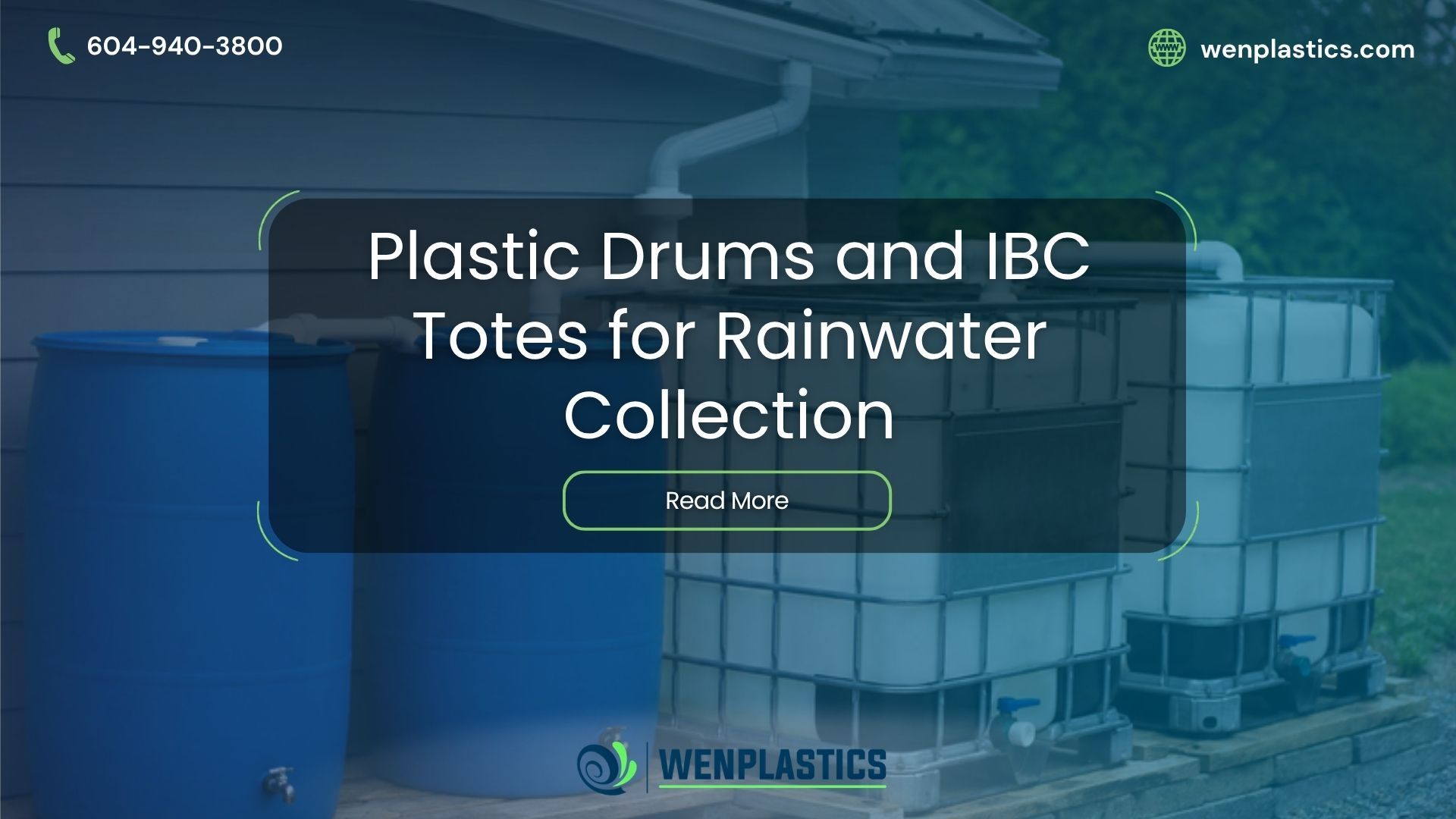
Plastic Drums and IBC Totes for Rainwater Collection
Rainwater collection is becoming a practical option for homeowners, farms, gardens, landscaping companies, and businesses looking for better ways to reuse water. Instead of allowing rainwater to flow directly into storm drains, many people collect it from rooftops, downspouts, or outdoor surfaces and store it for later use.
For many non-potable applications, plastic drums and IBC totes can offer a practical storage solution.
Plastic drums can work well for smaller rainwater collection needs, while IBC totes provide a larger-capacity option for users who need to store more water. Both options can support water conservation, reduce reliance on treated municipal water for outdoor use, and help make better use of natural rainfall.
However, choosing the right container matters. Rainwater collection systems should be planned carefully, especially when using used or reconditioned containers.
What Is Rainwater Collection?
Rainwater collection, also known as rainwater harvesting, is the process of collecting and storing rainwater for later use.
In many basic systems, rainwater flows from a roof into a gutter, moves through a downspout, and is directed into a storage container such as a rain barrel, plastic drum, or IBC tote.
Collected rainwater is commonly used for non-potable applications such as:
- Garden watering
- Landscaping
- Lawn care
- Outdoor cleaning
- Dust control
- Irrigation
- Greenhouse use
- Washing tools or equipment
- Some agricultural uses
Rainwater collected in barrels or totes should not be assumed safe for drinking, cooking, bathing, or food processing unless it has been properly treated and tested according to applicable requirements.
Why Use Plastic Containers for Rainwater Collection?
Plastic containers are popular for rainwater collection because they are durable, lightweight, and resistant to corrosion. Compared with some metal containers, plastic drums and IBC totes are easier to move, easier to handle, and less likely to rust.
Plastic containers can also be practical for outdoor storage when they are properly selected, installed, and maintained.
For rainwater collection, important container features may include:
- Durable plastic construction
- Suitable capacity
- Secure lid or cover
- Outlet valve or spigot
- Overflow option
- Stable base
- Easy connection to hoses or downspouts
- Protection from debris, pests, and sunlight
The right container depends on how much water you need to collect and how the water will be used.
Plastic Drums for Rainwater Collection
Plastic drums are a common choice for smaller rainwater collection setups. They can be used as rain barrels for gardens, landscaping, and general outdoor water storage.
A plastic drum may be a good option when the user needs a manageable container size and does not require large-volume storage.
Plastic drums can be useful for:
- Backyard gardens
- Small greenhouses
- Outdoor cleaning
- Residential landscaping
- Small farms
- Community gardens
- Seasonal water collection
One of the main advantages of plastic drums is their size. They are easier to place near a downspout, beside a garden, or in a small outdoor area.
For rainwater use, the drum should have a secure lid or covered opening to help keep out debris, insects, animals, and contaminants. Screens or filters may also be added to reduce leaves and other material from entering the container.
IBC Totes for Rainwater Collection
IBC totes are a larger-capacity option for rainwater collection. A standard IBC tote holds approximately 1,000 litres, or 275 gallons, which makes it useful for users who need to collect and store more water.
IBC totes may be a good option for:
- Larger gardens
- Farms
- Greenhouses
- Landscaping operations
- Nurseries
- Industrial yards
- Facilities with outdoor cleaning needs
- Agricultural water storage
- Larger rainwater harvesting systems
Because IBC totes include a protective cage and pallet base, they are practical for bulk storage and can be moved with suitable equipment when empty or properly handled.
IBC totes also usually include a bottom valve, which can make it easier to connect hoses or dispense water. This is helpful for irrigation, filling watering cans, or transferring water to another system.
Plastic Drum vs. IBC Tote: Which One Is Better?
The best option depends on the volume of water needed and the available space.
Plastic drums are often better for smaller spaces and lighter use. They are easier to position and may be suitable for a single downspout or small garden.
IBC totes are better when more capacity is needed. They can collect and store a much larger volume of rainwater, making them useful for farms, commercial properties, greenhouses, and larger outdoor applications.
| Option | Best For | Main Advantage |
| Plastic drum | Small gardens, homes, light outdoor use | Compact and easy to place |
| IBC tote | Farms, greenhouses, larger properties, bulk storage | Larger water capacity |
| Multiple drums | Medium-size garden systems | Flexible setup |
| Multiple IBC totes | Larger water storage systems | High-volume collection |
For many users, a plastic drum is a good starting point. For larger operations, an IBC tote may provide better storage capacity and efficiency.
Important Safety Considerations
Rainwater collection is useful, but it should be done carefully.
Rainwater can pick up contaminants from roofs, gutters, animals, dust, leaves, and other outdoor surfaces. Because of this, collected rainwater should generally be treated as non-potable unless proper treatment, testing, and local requirements are followed.
For most simple rain barrel or IBC tote systems, collected rainwater is best used for non-potable outdoor applications.
Businesses and homeowners should avoid using untreated collected rainwater for drinking, cooking, bathing, washing food-contact surfaces, or food processing.
If rainwater is intended for potable use, users should consult local regulations and qualified water treatment professionals.
Why Previous Contents Matter
When using a plastic drum or IBC tote for rainwater collection, the previous contents of the container are very important.
A container that previously held chemicals, oils, solvents, cleaning products, or unknown materials may not be suitable for rainwater collection, especially if the water will be used around gardens, animals, or food-producing plants.
For rainwater collection, users should avoid containers with unknown previous contents.
If the container is used or reconditioned, it should be selected carefully based on the intended use. For sensitive applications, a new container may be the better choice.
At Wenplastics, customers can review available options and choose containers based on their application, volume needs, and suitability.
Key Features to Consider
Before using plastic drums or IBC totes for rainwater collection, consider the full setup.
Secure lid or cover
A secure lid helps reduce debris, pests, and accidental access. This is especially important around children, pets, and wildlife.
Screened inlet
A screen can help keep leaves, insects, and other debris out of the container.
Overflow system
An overflow outlet helps direct excess water away from buildings, foundations, and walkways when the container becomes full.
Spigot or valve
A bottom spigot or valve makes it easier to access the water and connect a hose.
Stable base
The container should be placed on a firm, level, and stable surface. Water is heavy, and a full drum or tote can create serious weight and stability concerns.
Opaque container
Opaque containers can help reduce light exposure, which may help limit algae growth inside the container.
Easy maintenance access
The container should be easy to inspect and clean when needed.
Installation Tips for Rainwater Collection
A rainwater collection system does not need to be complicated, but it should be installed thoughtfully.
Useful tips include:
- Place the container near a downspout
- Use a stable and level base
- Keep the container covered
- Use a screen or filter at the inlet
- Include an overflow outlet
- Direct overflow away from the building
- Check valves and fittings regularly
- Clean gutters and screens as needed
- Empty or winterize the container if freezing conditions may damage it
- Avoid placing the container where it can tip, shift, or block access
The Capital Regional District recommends looking for rainwater containers that are durable, rot-resistant, opaque, and equipped with features such as kid-, pet-, and pest-proof covers, hose valves, and screens or filters to keep debris out and help prevent mosquitoes.
Rainwater Collection and Water Conservation
One of the main benefits of rainwater collection is water conservation.
Using collected rainwater for gardens, landscaping, and outdoor cleaning can reduce the use of treated municipal water for tasks that do not require drinking water quality.
This can be especially useful during dry seasons, watering restrictions, or periods of high outdoor water demand.
For businesses, rainwater collection can also support sustainability goals by making better use of available water resources.
Applications for Homes, Farms, and Businesses
Plastic drums and IBC totes can be used in many rainwater collection applications.
Homes and gardens
Homeowners may use plastic drums as rain barrels for watering flowers, shrubs, lawns, and ornamental plants.
Farms and agriculture
Farms may use IBC totes for larger water storage needs, irrigation support, equipment washing, or other non-potable outdoor uses.
Greenhouses and nurseries
Greenhouses and nurseries may benefit from larger rainwater storage systems to support plant care and reduce reliance on municipal water.
Landscaping companies
Landscaping businesses may use collected rainwater for irrigation, outdoor cleaning, and plant maintenance.
Industrial and commercial facilities
Facilities may collect rainwater for non-potable outdoor cleaning, dust control, or landscape maintenance.
Plastic Containers and Sustainability
Plastic drums and IBC totes can support sustainability when they are used responsibly.
These containers are durable and can often be reused for suitable applications. When a container can no longer be used, the plastic material may also be recoverable depending on the condition and previous contents.
Using plastic containers for rainwater collection can support environmental goals by:
- Reducing water waste
- Encouraging reuse
- Supporting outdoor water conservation
- Reducing demand for treated water in non-potable applications
- Giving suitable containers another practical use
This connects directly with circular economy principles: keeping useful materials in service for longer and reducing unnecessary waste.
When to Choose a New Container
A new plastic drum or IBC tote may be the best choice when the application requires a clean, unused container or when the user cannot accept uncertainty about previous contents.
New containers may be preferred for:
- Sensitive garden applications
- Greenhouses
- Nurseries
- Schools or public areas
- Applications near animals
- Situations where previous contents are unknown
- Customers who want maximum confidence in container history
For many rainwater collection projects, especially those involving garden or agricultural use, knowing the container history is important.
When Reconditioned Containers May Be Suitable
Reconditioned containers may be suitable for some non-potable rainwater collection applications, depending on their previous contents, cleaning process, condition, and intended use.
They can provide a practical and cost-effective option for applications where the water will be used for non-food, non-potable purposes.
However, users should always confirm suitability before using reconditioned containers for rainwater collection. Containers with unknown or unsuitable previous contents should be avoided.
Wenplastics Solutions for Rainwater Collection
Wenplastics provides plastic packaging solutions for businesses, farms, manufacturers, and industrial customers across Canada and the United States.
For rainwater collection and non-potable water storage, Wenplastics can help customers review options such as plastic drums and IBC totes depending on availability, application, and volume requirements.
Whether you need a smaller container for garden water collection or a larger-capacity IBC tote for bulk rainwater storage, choosing the right container is important.
Our team can help you consider container size, previous contents, valve options, handling needs, and whether a new or reconditioned option may be suitable for your application.
Final Thoughts
Plastic drums and IBC totes can be practical options for rainwater collection when used correctly.
Plastic drums are useful for smaller systems, gardens, and light outdoor use. IBC totes offer larger capacity for farms, greenhouses, landscaping operations, and facilities that need more water storage.
In both cases, rainwater should generally be treated as non-potable unless properly treated and tested. Container history, cleanliness, fittings, covers, and installation all matter.
By choosing the right plastic container, businesses and property owners can collect rainwater more efficiently, support water conservation, and make better use of available resources.
Contact Wenplastics to learn more about plastic drums, IBC totes, and packaging solutions for non-potable rainwater collection.

Comments are closed