
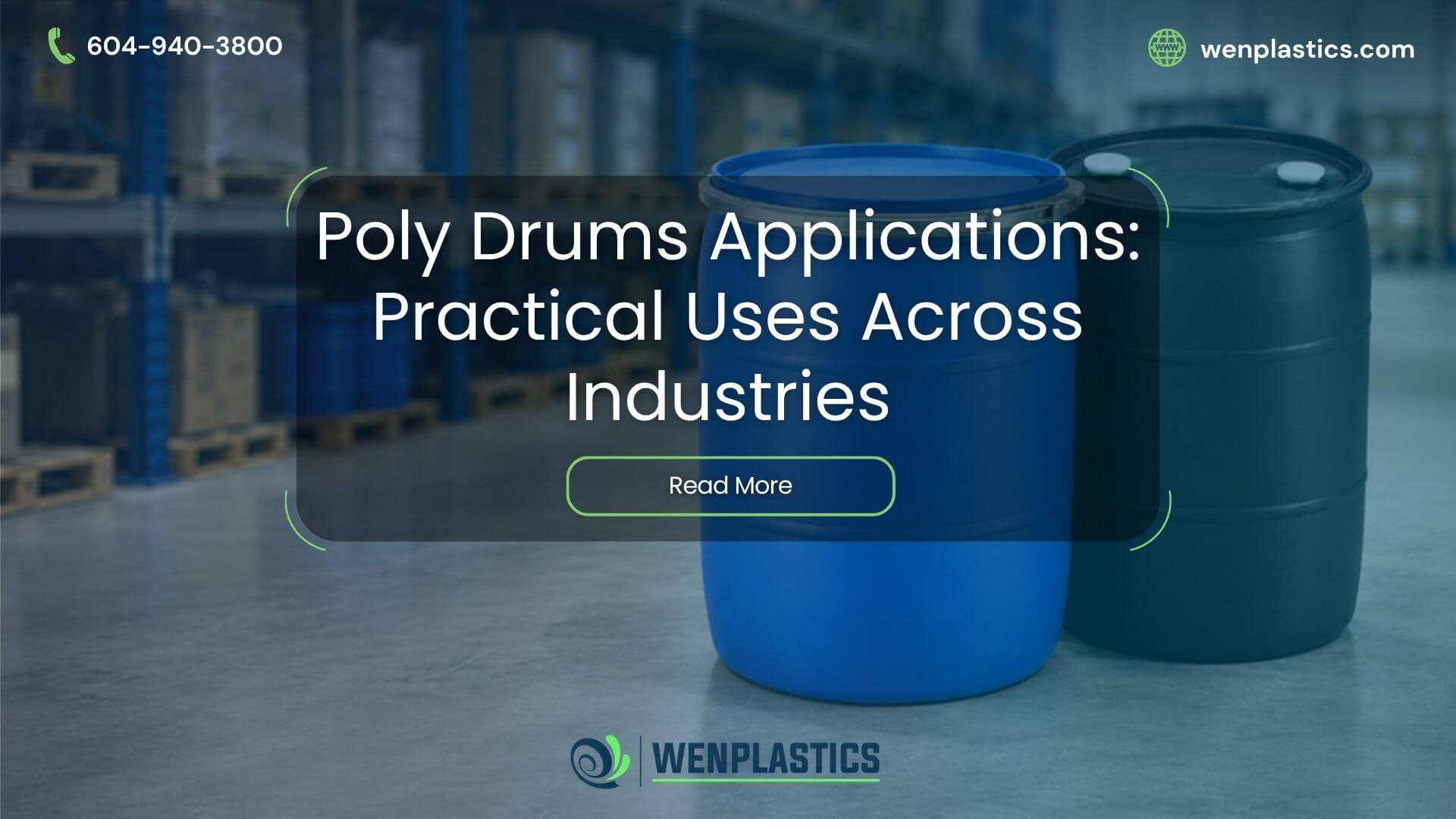
Poly drums are one of the most practical packaging and storage solutions used across industrial, commercial, and manufacturing sectors. Known for their durability, chemical resistance, and versatility, poly drums can help businesses safely store, handle, and transport a wide range of liquid and solid materials.
From chemicals and cleaning products to agriculture supplies, waste handling, construction materials, and industrial liquids, poly drums offer a reliable option for businesses that need strong and efficient packaging.
What Are Poly Drums?
Poly drums, also known as plastic drums, are containers commonly made from high-density polyethylene, or HDPE. This material is widely used because it is strong, lightweight, resistant to many chemicals, and suitable for demanding industrial environments.
Poly drums are available in different sizes and styles, including open-head and closed-head designs.
Open-head poly drums have removable lids, making them useful for thicker products, solids, powders, and materials that need easy access. Closed-head poly drums have fixed tops with smaller openings, making them a practical choice for liquids that need to be poured, pumped, or dispensed.
Depending on the application, businesses may require UN-rated drums, specific fittings, closures, or compatibility requirements. Choosing the right drum is important to help support safe handling, storage, and transportation.
Why Businesses Use Poly Drums
Poly drums are popular because they are durable, easy to handle, and suitable for many industries. Compared to some other packaging options, plastic drums are resistant to rust, corrosion, and moisture, which makes them useful in both indoor and outdoor environments.
Businesses use poly drums because they can help with:
- Bulk storage
- Product transportation
- Safe material handling
- Inventory organization
- Waste collection
- Reusable packaging systems
- Industrial and commercial operations
However, not every poly drum is suitable for every product. The material being stored, the required rating, chemical compatibility, and handling conditions should always be considered before selecting a drum.
1. Chemical and Industrial Products
One of the most common applications for poly drums is the storage and transport of chemical and industrial products.
Many chemicals require containers that can resist corrosion, moisture, and exposure to harsh environments. HDPE poly drums are often used for products such as cleaning chemicals, detergents, solvents, lubricants, additives, and industrial liquids.
For hazardous or regulated materials, businesses may need UN-rated poly drums designed and tested for specific transport and safety requirements. UN-rated drums can help companies meet packaging requirements when handling certain regulated products.
Before using any poly drum for chemicals, it is important to confirm compatibility between the drum material and the product being stored or transported.
2. Cleaning and Sanitation Products
Plastic drums are widely used by companies that manufacture or distribute cleaning and sanitation products.
Products such as liquid soaps, detergents, disinfectants, degreasers, and janitorial chemicals are often stored and shipped in plastic drums. These containers help protect the product while making it easier to handle larger volumes.
For businesses serving commercial cleaning, healthcare, manufacturing, facility maintenance, and industrial sanitation industries, poly drums can provide a practical packaging option for bulk cleaning products.
Because some cleaning and sanitation products may be classified as regulated materials, a UN-rated drum may be required depending on the product type, concentration, and transportation requirements.
3. Agriculture and Farming Applications
Agriculture businesses often need durable containers for storing and handling liquids, powders, and other materials used in daily operations.
Poly drums can be used for fertilizers, soil additives, animal care products, water treatment products, agricultural chemicals, and other farm-related materials.
Because poly drums are resistant to moisture and many outdoor conditions, they can be useful in farms, greenhouses, nurseries, and agricultural supply operations.
For regulated agricultural chemicals, businesses should confirm whether a UN-rated drum is required before storing or transporting the product.
4. Waste Collection and Recycling
Poly drums are also used for waste collection, recycling, and recovery operations.
They can help businesses collect used materials, production waste, off-spec products, plastic scrap, absorbents, and other industrial waste streams.
In manufacturing environments, drums can make it easier to separate materials by type, organize waste handling, and keep work areas cleaner.
For hazardous waste or regulated materials, businesses should confirm whether a UN-rated drum or another approved container is required. Using the correct drum can help support safer handling and transportation practices.
5. Manufacturing and Production Facilities
Manufacturing facilities use poly drums for many everyday operations. They can be used to store raw materials, additives, production liquids, cleaning agents, and maintenance supplies.
Poly drums are also practical for internal handling because they are easier to move than larger bulk containers while still offering significant storage capacity.
Industries such as plastics, automotive, metalworking, coatings, textiles, and general manufacturing may all benefit from using poly drums in their operations.
For facilities that handle regulated materials, UN-rated poly drums can be an important part of their packaging and storage process.
6. Construction and Building Materials
The construction industry uses many liquid and powdered materials that need strong and reliable packaging.
Poly drums may be used for adhesives, sealants, coatings, curing agents, concrete additives, waterproofing products, and other construction-related materials.
Because construction sites can be demanding environments, poly drums offer the advantage of durability and resistance to rust and moisture.
They can also help contractors, manufacturers, and suppliers store materials more securely and transport them more efficiently.
Depending on the formulation, some construction materials may require UN-rated packaging for safe and compliant transport.
7. Paints, Coatings, and Inks
Poly drums are commonly used for paints, coatings, inks, dyes, and related products.
These materials often need containers that can protect the contents from contamination, leakage, and environmental exposure. Plastic drums can be a practical option for manufacturers and distributors handling large volumes of liquid products.
Depending on the formulation, businesses should confirm chemical compatibility, closure requirements, and whether a UN-rated drum is required.
For many paint, coating, and ink applications, choosing the right container helps support product protection, safer handling, and more efficient storage.
8. Water Treatment and Environmental Services
Water treatment companies and environmental service providers often use poly drums for chemicals, additives, and treatment products.
Applications may include pH adjustment chemicals, treatment solutions, filtration products, environmental cleanup materials, and industrial wastewater treatment products.
Poly Drums are useful in this industry because they are strong, portable, and suitable for many liquid handling needs.
For regulated or hazardous materials, businesses should ensure the drum meets the required safety and transport standards.
9. Marine, Automotive, and Maintenance Uses
Poly drums can also support marine, automotive, and maintenance operations.
They may be used for lubricants, coolants, washer fluids, cleaning solutions, oils, and other service-related products.
Because poly drums are resistant to rust and moisture, they can be useful in environments where metal containers may not be ideal.
Workshops, service centres, transportation companies, and maintenance departments can use poly drums to store and organize bulk liquids more efficiently.
When handling regulated products, businesses should always confirm whether a UN-rated drum is required.
Choosing the Right Poly Drum
Not every poly drum is suitable for every product. Before choosing a drum, businesses should consider the specific application, product type, and handling requirements.
Important factors include:
- Product type
- Chemical compatibility
- UN rating requirements
- Open-head or closed-head design
- Storage and transport conditions
- Closure and fitting needs
- Reuse or disposal plans
- Regulatory requirements
For example, a hazardous or regulated chemical may require a UN-rated drum, while a thick material may be easier to handle in an open-head drum. A liquid product that needs to be poured or pumped may be better suited for a closed-head drum.
It is also important to note that UN-rated does not automatically mean food-grade. At Wenplastics, our poly drums are UN-rated but not food-grade, so they are intended for industrial, commercial, regulated, and non-food-contact applications.
Choosing the correct drum helps protect the product, support workplace safety, and improve handling efficiency.
Poly Drums and Sustainability
Poly drums can also support more sustainable packaging practices when they are properly reused, recycled, or recovered.
Because HDPE is a recyclable plastic, poly drums may be part of a broader plastic recovery process after their useful life, depending on the material, previous contents, and local recycling options.
Businesses can improve sustainability by choosing the right packaging, reducing unnecessary waste, and working with suppliers that understand plastic recovery and responsible material handling.
How Wenplastics Can Help
Wenplastics provides plastic packaging solutions for businesses across Canada and the United States. Based in Delta, British Columbia, Wenplastics works with IBC totes, plastic pails, poly drums, and plastic recovery solutions for a variety of industries.
Our poly drums are UN-rated but not food-grade, making them a practical option for industrial products, regulated materials, chemicals, cleaning products, agriculture, manufacturing, waste handling, construction materials, and other non-food-contact applications.
Our team understands that every application is different. That is why choosing the right container, material, rating, and closure is an important part of the process.
Whether your business needs poly drums, IBC totes, plastic pails, or related packaging solutions, Wenplastics can help you find a practical option for your operations.
Final Thoughts
Poly drums are practical, durable, and versatile containers used across many industries. From chemicals and cleaning products to agriculture, manufacturing, construction, water treatment, automotive, and waste handling, poly drums can support safe and efficient storage and transport.
The key is choosing the right drum for the right application.
For businesses looking for reliable plastic packaging solutions, Wenplastics can help provide UN-rated poly drums, IBC totes, plastic pails, and related packaging options to support everyday operations.

Comments are closed