
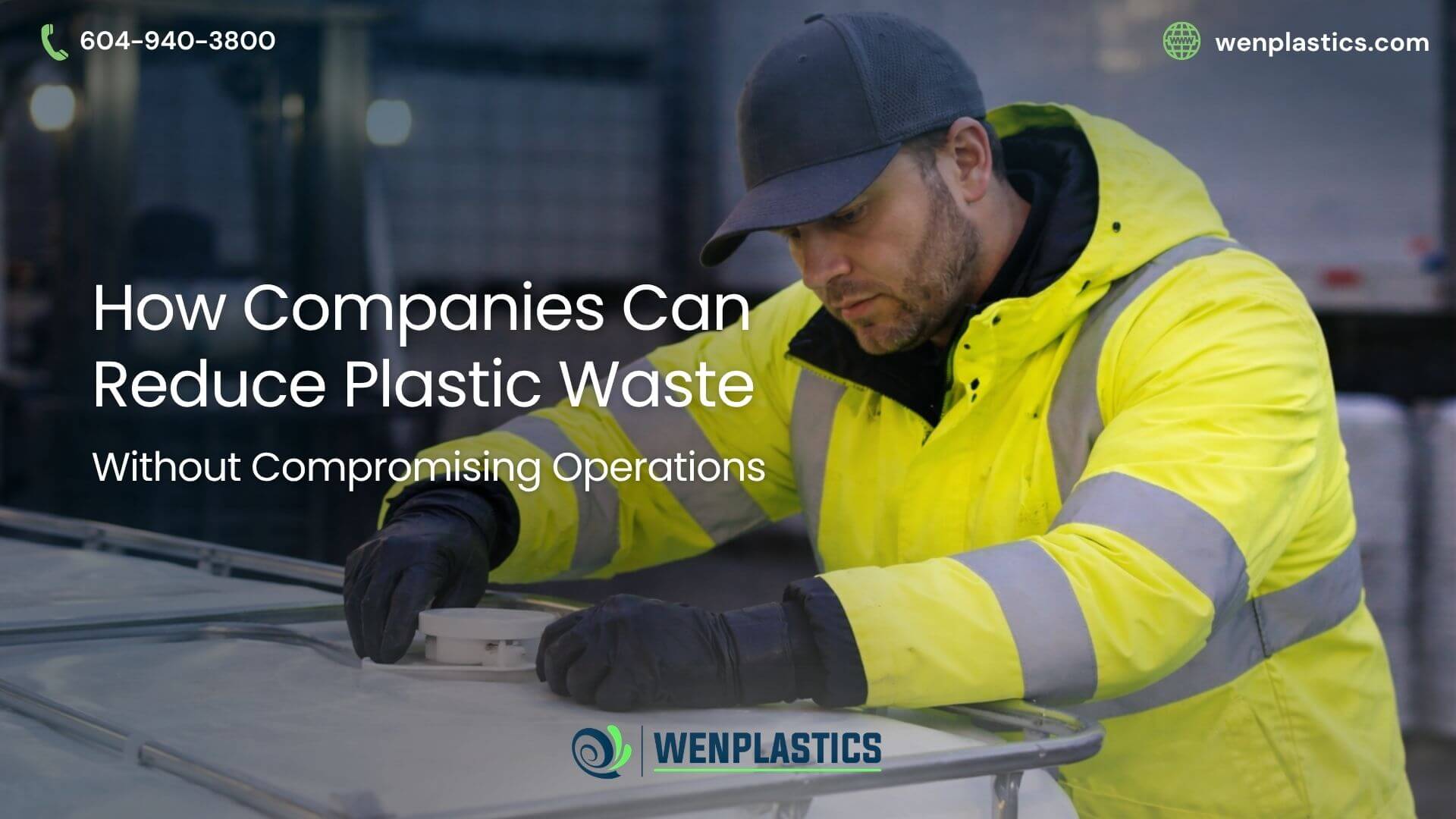
How Companies Can Reduce Plastic Waste (Without Compromising Operations)
Plastic is essential in modern industry — from packaging and transportation to storage and manufacturing. But with growing environmental pressure and upcoming regulations across Canada, companies are now expected to reduce waste without sacrificing efficiency.
The good news? Reducing plastic waste doesn’t mean eliminating plastic. It means using it smarter.
Here’s how companies can take practical steps toward a more sustainable operation.
1. Shift from Single-Use to Reusable Packaging
One of the biggest sources of plastic waste in industrial operations is single-use packaging.
Instead, companies can switch to:
- IBC totes for bulk liquid storage
- Plastic drums for repeated transport cycles
- Reusable plastic pails for materials like paints and coatings
These solutions are designed for durability and multiple uses, significantly reducing disposal volume over time.
Example:
A single IBC tote can replace dozens of smaller containers — reducing both waste and handling costs.
2. Choose Reconditioned or Rebottled Containers
Not every application requires brand-new packaging.
Options like:
- Reconditioned IBC totes (cleaned and tested)
- Rebottled IBC totes (new bottle + reconditioned cage)
offer a lower environmental impact while maintaining performance standards.
At Wenplastics, each unit goes through inspection and testing to ensure safety and reliability.
Benefit:
You reduce plastic waste and lower procurement costs.
3. Implement Closed-Loop Recycling Systems
Instead of disposing of plastic materials, companies can reintroduce them into the production cycle.
This includes:
- Collecting used plastic containers
- Processing materials into HDPE or PP regrind
- Reusing regrind in manufacturing applications
This is the foundation of a circular economy — where materials are continuously reused instead of discarded.
4. Optimize Packaging Design and Volume
Overpackaging is a hidden contributor to plastic waste.
Companies can reduce waste by:
- Using the right container size (e.g., 275 gal vs 330 gal IBC totes)
- Consolidating shipments into bulk containers
- Eliminating unnecessary layers of packaging
Result:
Less material used, lower transportation costs, and improved operational efficiency.
5. Work with Local Manufacturers
Sourcing locally reduces both environmental impact and supply chain inefficiencies.
Benefits include:
- Lower transportation emissions
- Faster lead times
- Better quality control and support
Wenplastics manufactures and supplies plastic packaging directly from Delta, BC — helping businesses across Canada and US access reliable, locally produced solutions.
6. Ensure Proper Use for Food or Sensitive Applications
Contamination leads to waste.
For industries like food processing or pharmaceuticals:
- Use new or rebottled containers (with new HDPE bottles)
- Avoid reconditioned options when purity is critical
Choosing the right product prevents product loss — which is often more costly than the packaging itself.
7. Prepare for 2026 and Beyond (EPR Regulations)
Across Canada, Extended Producer Responsibility (EPR) regulations are shifting accountability to producers.
This means companies must:
- Track their packaging waste
- Improve recyclability
- Reduce overall environmental impact
Taking action now — by adopting reusable systems and recycled materials — helps future-proof your business.
Final Thoughts
Reducing plastic waste isn’t about removing plastic from your operations — it’s about using it more efficiently, responsibly, and strategically.
Companies that adopt reusable systems, invest in recycling, and optimize their packaging will not only reduce their environmental footprint but also improve their bottom line.

Comments are closed