
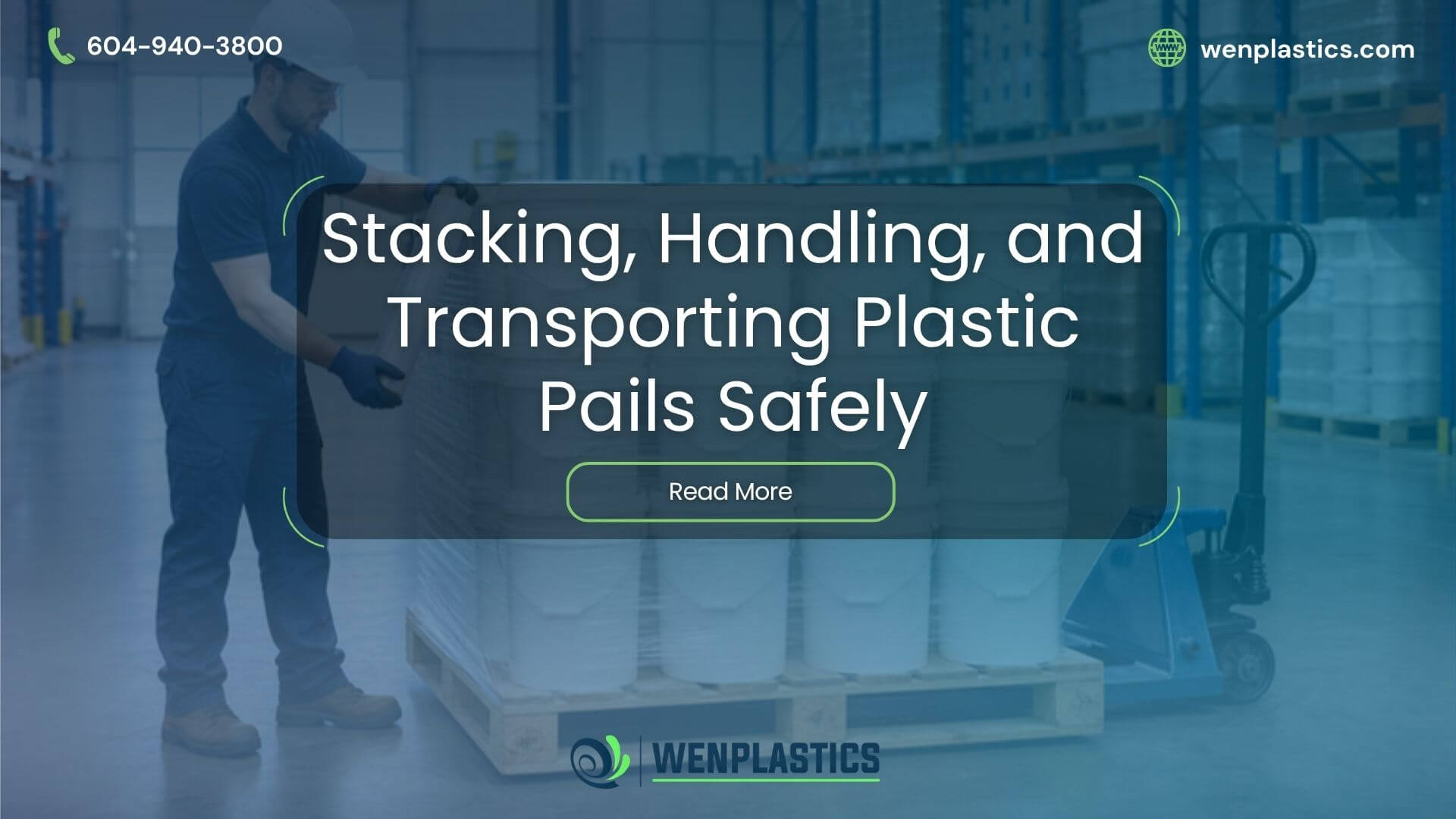
Stacking, Handling, and Transporting Plastic Pails Safely
Plastic pails are widely used to store and transport food products, chemicals, coatings, cleaning supplies, adhesives, and other industrial materials. Although they are durable and practical, improper handling can damage the packaging, cause spills, and create workplace safety risks.
Following a few essential practices can help businesses protect their products, employees, and operations throughout storage and transportation.
Why Safe Handling Matters
Cracked containers, unsecured lids, unstable stacks, and damaged pallets can lead to product loss, contamination, cleanup costs, and operational delays.
Proper handling practices can help businesses:
- Reduce spills and product damage
- Maintain product quality
- Improve warehouse organization
- Protect employees from injuries
- Support efficient loading and transportation
- Extend the usable life of packaging
1. Choose the Right Plastic Pail
Safe handling begins with selecting packaging that is suitable for the product and its intended use.
Before choosing a plastic pail, consider:
- The product’s weight, density, and physical form
- Chemical compatibility
- Food-safety or regulatory requirements
- Expected storage conditions
- Transportation distance and method
- Whether the filled pails will be stacked
Food or beverage products may require food-grade plastic pails, while certain chemicals and regulated materials may require UN-rated packaging. Using the appropriate pail and lid combination helps protect the product and support compliance throughout the supply chain.
2. Inspect Pails Before Use
Plastic pails should be visually inspected before they are filled, stacked, or shipped. Small defects can become serious problems once the container is placed under pressure or moved.
Check for:
- Cracks, dents, or deformation
- Damaged handles or rims
- Loose or damaged lids
- Contamination inside the pail
- Signs of impact or weak areas
- Improper closure fit
Damaged packaging should not be used when leaks, contamination, or product loss could create safety or operational concerns.
3. Fill and Close Pails Correctly
Using the correct lid and securing it properly are essential for protecting the product. Before moving or stacking a filled pail, confirm that the lid is compatible with the container and fully closed.
Avoid overfilling the pail, as this can prevent proper closure, increase pressure on the container, and cause spills during handling. Appropriate headspace may also be necessary for products that expand or shift because of temperature changes or movement.
For regulated products, confirm that the complete pail and closure combination meets the applicable packaging requirements.
4. Follow Safe Stacking Practices
Stacking plastic pails can improve warehouse efficiency, but stacks must remain stable and within the packaging’s recommended limits.
Consider the following factors:
- Weight of the filled pails
- Strength and condition of the pails and lids
- Recommended stacking height
- Length of storage
- Floor or pallet stability
- Environmental conditions
Place pails evenly on stable, level surfaces, with heavier containers positioned at the bottom. Avoid leaning stacks, damaged pallets, and pails that extend beyond the pallet edges.
Excessive stacking height or weight can crush lower containers, deform lids, cause leaks, or result in load collapse. Always follow supplier recommendations and workplace safety procedures.
5. Maintain Appropriate Storage Conditions
Storage conditions can affect both packaging performance and product quality. Plastic pails should be kept in a clean, organized area and protected from unnecessary impact, excessive heat, and prolonged direct sunlight.
Storage best practices include:
- Keep pails on stable, level surfaces
- Maintain clear aisles for safe movement
- Protect containers from sharp objects and equipment
- Separate incompatible products
- Keep food-grade packaging in clean conditions
- Avoid excessive heat and long-term sun exposure
Organized storage also makes it easier to inspect inventory and identify damaged containers before they create problems.
6. Handle Filled Pails Carefully
Filled pails can be heavy and difficult to move safely. Employees should avoid dropping, dragging, throwing, or rolling them unless the packaging is specifically designed for that type of handling.
Rough movement can damage the base, sidewalls, lid, or handle, even when the damage is not immediately visible.
Workers should use proper lifting techniques and suitable equipment. For heavier loads or larger quantities, pallet jacks, forklifts, and other material-handling equipment can improve safety and efficiency.
7. Secure Pails During Transportation
Transportation exposes packaging to movement, vibration, pressure, and repeated handling. Loads should be stable and properly secured before leaving the facility.
Recommended practices include:
- Use strong pallets in good condition
- Keep pails within the pallet footprint
- Secure loads with stretch wrap, straps, or another suitable method
- Confirm that all lids are fully closed
- Protect pails from sharp edges and heavy objects
- Avoid unstable stacking patterns
- Separate incompatible products
- Follow applicable requirements for regulated materials
For long-distance shipping, carefully evaluate load stability, packaging compatibility, and pallet condition before transport.
8. Train Employees and Establish Clear Procedures
Even high-quality packaging can fail when handled incorrectly. Employees should understand how to inspect, fill, close, stack, move, and secure plastic pails safely.
Training should also explain how to identify damaged packaging, report spills or unsafe loads, and operate material-handling equipment correctly.
Clear procedures help reduce mistakes, improve efficiency, and create a safer workplace.
Choosing a Reliable Plastic Pail Supplier
A reliable supplier can help your business select plastic pails that match your product, storage environment, transportation needs, and regulatory requirements.
When evaluating suppliers, consider product quality, availability, consistent specifications, customer support, and access to food-grade or UN-rated options.
Final Thoughts
Safe plastic pail management depends on selecting the appropriate packaging and using it correctly throughout filling, storage, handling, and transportation.
At Wenplastics, we supply durable plastic pails and industrial packaging solutions for businesses across Canada and the U.S., including UN-rated options for regulated products.
Contact Wenplastics to learn more about our available plastic pails and find the right packaging solution for your business.

Comments are closed