
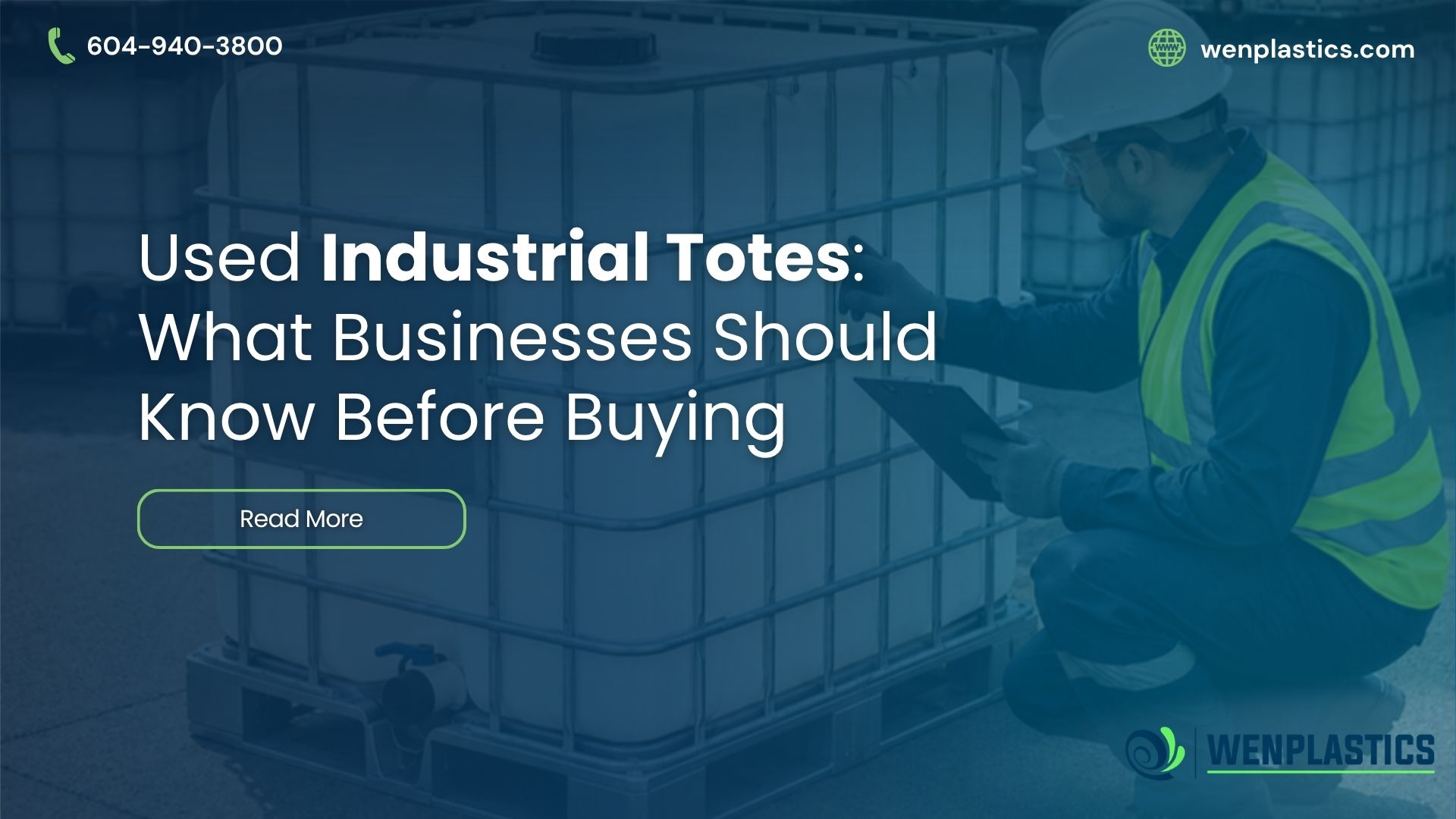
Used Industrial Totes: What Businesses Should Know Before Buying
Used industrial totes can be a practical and cost-effective solution for businesses that need bulk storage, material handling, or transportation capacity without purchasing brand-new containers.
Also known as used IBC totes, intermediate bulk containers typically hold approximately 1,000 litres, or 275 gallons. Their durable plastic inner bottle, protective metal cage, pallet base, and discharge valve make them useful across many industrial applications.
However, not every used tote is suitable for every product. Before purchasing a used industrial tote, businesses should understand its condition, previous use, cleaning process, components, and intended application.
What Are Used Industrial Totes?
Used industrial totes are IBC containers that have previously been used for storage or transportation and are later collected for reuse, refurbishment, recycling, or component recovery.
Depending on their condition, used totes may be:
- Sold in their existing condition for appropriate non-sensitive applications
- Cleaned and reconditioned
- Fitted with replacement parts
- Converted into rebottled totes with a new inner bottle
- Separated into plastic and metal components for recycling
The exact condition and suitability of a used tote can vary significantly. For this reason, buyers should never assume that all used totes offer the same level of cleanliness, performance, or product compatibility.
Common Applications for Used Industrial Totes
Used totes are considered for non-food and non-sensitive industrial applications, such as:
- Collection of recyclable materials
- Wastewater storage
- Rainwater collection
- Agricultural irrigation
- Construction-site water
- Non-potable water storage
- Used oil collection
- Manufacturing waste
- Cleaning and wash-water systems
- General industrial material handling
The appropriate application depends on the condition of the tote and the product it previously contained.
A tote that is suitable for collecting rainwater may not be suitable for chemicals, ingredients, cosmetics, animal feed, or products that may come into contact with people.
Previous Contents Are an Important Consideration
Used totes may come from different industries and suppliers. In some cases, complete information about the previous contents may not be available or guaranteed.
Even when a tote appears clean, small amounts of residue or odour may remain inside the bottle, valve, lid, gasket, or other components. Some materials may also be absorbed into or react with the plastic.
For this reason, businesses should not use those used totes for storing: Food or beverage ingredients, drinking water, pharmaceutical materials, cosmetics, animal feed, sensitive chemicals and products with strict purity requirements.
For food-related, potable-water, pharmaceutical, cosmetic, or other sensitive applications, a new ibc tote or a rebottled tote with a new inner bottle is the more appropriate option.
Used, Reconditioned, and Rebottled Totes
The terms used, reconditioned, and rebottled are sometimes treated as interchangeable, but they describe different product conditions.
Used Industrial Totes
A used tote has previously been in service. It may be empty and visually inspected, but the level of cleaning, testing, and component replacement can vary.
These totes are generally most appropriate for applications where previous product contact is not a concern.
Reconditioned IBC Totes
A reconditioned ibc tote has gone through a refurbishment process. Depending on the supplier and tote condition, this process may include:
- Exterior washing
- Interior cleaning
- Valve inspection
- Lid inspection
- Cage inspection
- Pallet inspection
- Leak testing
- Replacement of selected components
Reconditioning can extend the useful life of an IBC tote. However, the original inner bottle remains part of the container, so the tote should still be selected according to its previous use and intended application.
Rebottled IBC Totes
A rebottled tote combines a new plastic inner bottle with a previously used cage and pallet structure that have been inspected and prepared for reuse.
Because the product-contact bottle is new, rebottled totes provide a cleaner internal surface than standard used or reconditioned totes.
They are often considered by businesses that want a lower-cost alternative to an entirely new tote while still requiring a new inner bottle.
The cage, pallet, valve, lid, gasket, and certification requirements should still be evaluated for the intended product and transportation conditions.
Inspecting a Used Industrial Tote
Before using a tote, businesses should inspect the complete container, not only the plastic bottle.
Important areas to check include:
Inner Bottle
Look for:
- Cracks
- Deep scratches
- Discolouration
- Strong odours
- Residue
- Bulging
- UV damage
- Deformation
- Signs of chemical exposure
A damaged bottle may leak or fail during filling, storage, handling, or transportation.
Metal Cage
The cage helps support and protect the inner bottle. It should be checked for:
- Bent bars
- Broken welds
- Excessive rust
- Missing sections
- Structural deformation
- Damage caused by forklifts or impacts
A compromised cage may reduce stability, especially when the tote is full or stacked.
Pallet Base
IBC totes may have plastic, metal, wood, or composite pallet bases.
The pallet should sit evenly and remain stable. Businesses should check for cracks, corrosion, broken supports, missing fasteners, and forklift damage.
Valve and Outlet
The discharge valve is one of the most important components of an IBC tote.
Inspect the valve for:
- Leakage
- Cracks
- Damaged threads
- Missing caps
- Worn seals
- Improper opening or closing
- Residue around the outlet
The valve material and gasket should also be compatible with the product being stored.
Lid and Gasket
The lid should close securely and should not be cracked, warped, or damaged. The gasket should be inspected for wear, contamination, brittleness, swelling, or chemical damage.
A tote should be treated as a complete packaging system. The bottle, cage, pallet, valve, lid, and gaskets all contribute to its performance.
Product Compatibility
A plastic tote may be physically strong but still be unsuitable for a particular product.
Compatibility depends on factors such as:
- Chemical composition
- Product concentration
- Temperature
- Storage duration
- Product density
- Valve and gasket material
- Indoor or outdoor exposure
- Transportation conditions
High-density polyethylene is widely used for IBC bottles, but it is not compatible with every substance or operating condition.
Businesses should review product information, safety data sheets, supplier recommendations, and applicable regulations before filling a tote.
UN-Rated IBC Totes
Some products classified as dangerous goods require UN-rated packaging.
A UN marking applies to a tested packaging design and configuration. Businesses should not assume that a tote remains suitable for regulated transportation simply because a previous UN marking is visible on the container.
The tote’s age, inspection status, inner bottle, valve, closure system, components, testing, certification, and intended contents may affect whether it can legally and safely be used.
For regulated products, buyers should confirm that the tote is properly certified or recertified for the specific application and transportation requirements.
A standard used tote should not automatically be used for dangerous goods.
Can Used Totes Be Used for Drinking Water?
Used industrial totes are not suitable for drinking water.
A tote’s appearance alone does not confirm that it is safe for potable-water storage. Previous contents, residues, cleaning products, bottle condition, component materials, and storage history can all affect suitability.
For drinking water, food, beverage, or other sensitive applications, businesses should use packaging specifically selected and documented for that purpose. New or appropriately specified rebottled totes are normally preferable when a clean product-contact surface is required.
Outdoor Storage Considerations
IBC totes are frequently used outdoors, but prolonged exposure can affect their condition.
Sunlight and weather may cause:
- Plastic degradation
- Brittleness
- Discolouration
- Cage corrosion
- Gasket deterioration
- Increased product temperature
- Algae growth in water applications
Outdoor totes should be placed on a level, stable surface and protected from direct sunlight when possible.
The stored product may also require protection from freezing, excessive heat, contamination, or temperature fluctuations.
Safe Handling and Stacking
A filled 1,000-litre tote can weigh more than one tonne depending on the density of the product. Safe handling procedures are essential.
Businesses should:
- Use appropriate forklifts or handling equipment
- Keep forks correctly positioned
- Avoid puncturing the bottle
- Inspect the pallet before lifting
- Move totes on stable surfaces
- Keep valves closed and protected
- Follow manufacturer stacking guidance
- Avoid stacking damaged totes
- Consider the weight of the stored product
An empty tote that appears stable may behave very differently after it is filled.
Cleaning Does Not Make Every Tote Suitable
Cleaning can remove many visible residues, but it does not automatically make a tote suitable for every application.
Some substances may leave odours, stains, absorbed residues, or chemical contamination. The valve and gasket may also retain material even when the main bottle appears clean.
Businesses should not rely only on visual appearance. The intended product and risk level should determine whether a used, reconditioned, rebottled, or new tote is required.
Environmental Benefits of Reusing IBC Totes
When used appropriately, industrial tote reuse can support circular-economy practices.
Reusing cages, pallets, and other components can:
- Extend packaging life
- Reduce demand for new materials
- Lower industrial waste
- Recover valuable steel and plastic
- Reduce unnecessary disposal
- Support refurbishment and recycling operations
Totes that cannot be safely reused may still provide recyclable materials. Plastic inner bottles can be processed into regrind for suitable manufacturing applications, while metal cages and pallet components can be separated for recycling.
Responsible reuse requires proper inspection and application selection. Sustainability should never replace product safety, compatibility, or regulatory compliance.
Questions to Ask Before Purchasing Used Totes
Before placing an order, businesses should ask:
- Is the tote used, reconditioned, or rebottled?
- Is the inner bottle new or previously used?
- Are the previous contents known?
- Has the tote been cleaned and inspected?
- Has it been leak tested?
- What type of valve and lid are installed?
- What pallet material does it have?
- Is it suitable for the intended product?
- Is a UN-rated or recertified tote required?
- Will the tote be used for food, water, chemicals, or general industrial purposes?
Providing accurate application information helps the supplier recommend a more suitable container.
Choosing the Right Industrial Tote
Used ibc totes can provide excellent value when they are selected for appropriate applications.
However, price should not be the only consideration. Businesses must also evaluate:
- Previous contents
- Tote condition
- Cleaning history
- Product compatibility
- Required certification
- Valve and closure configuration
- Transportation requirements
- Environmental exposure
- Reuse plans
A standard used tote may be appropriate for general industrial recovery or non-sensitive water applications. A reconditioned tote may offer a better overall condition for compatible products. A rebottled tote provides a new product-contact bottle, while a completely new tote offers new components throughout the packaging system.
Used Industrial Totes from Wenplastics
Wenplastics supplies industrial IBC tote solutions for businesses across a range of industries.
Available options may include:
- Used or reconditioned IBC totes
- Rebottled IBC totes
- Brand-new IBC totes
- UN-rated or recertified options
- Replacement bottles
- Valves, lids, and other components
- Tote refurbishment
- Plastic and metal material recovery
Because used totes may be sourced from different suppliers, Wenplastics cannot always guarantee their previous contents. For food-grade or other sensitive applications, Wenplastics recommends selecting a new tote or an appropriate rebottled option with a new inner bottle.
Conclusion
Used industrial totes are a durable and economical bulk-packaging option for many non-sensitive applications.
The most important step is choosing the tote according to its actual condition and intended use. Businesses should evaluate the inner bottle, cage, pallet, valve, lid, previous contents, product compatibility, and certification requirements before filling or transporting the container.
By selecting the appropriate tote category, companies can reduce costs, extend the life of industrial packaging, recover valuable materials, and improve their environmental performance without compromising safety.
Contact Wenplastics to discuss your application and determine whether a used, reconditioned, rebottled, or brand-new IBC tote is the right option for your business.

Comments are closed