
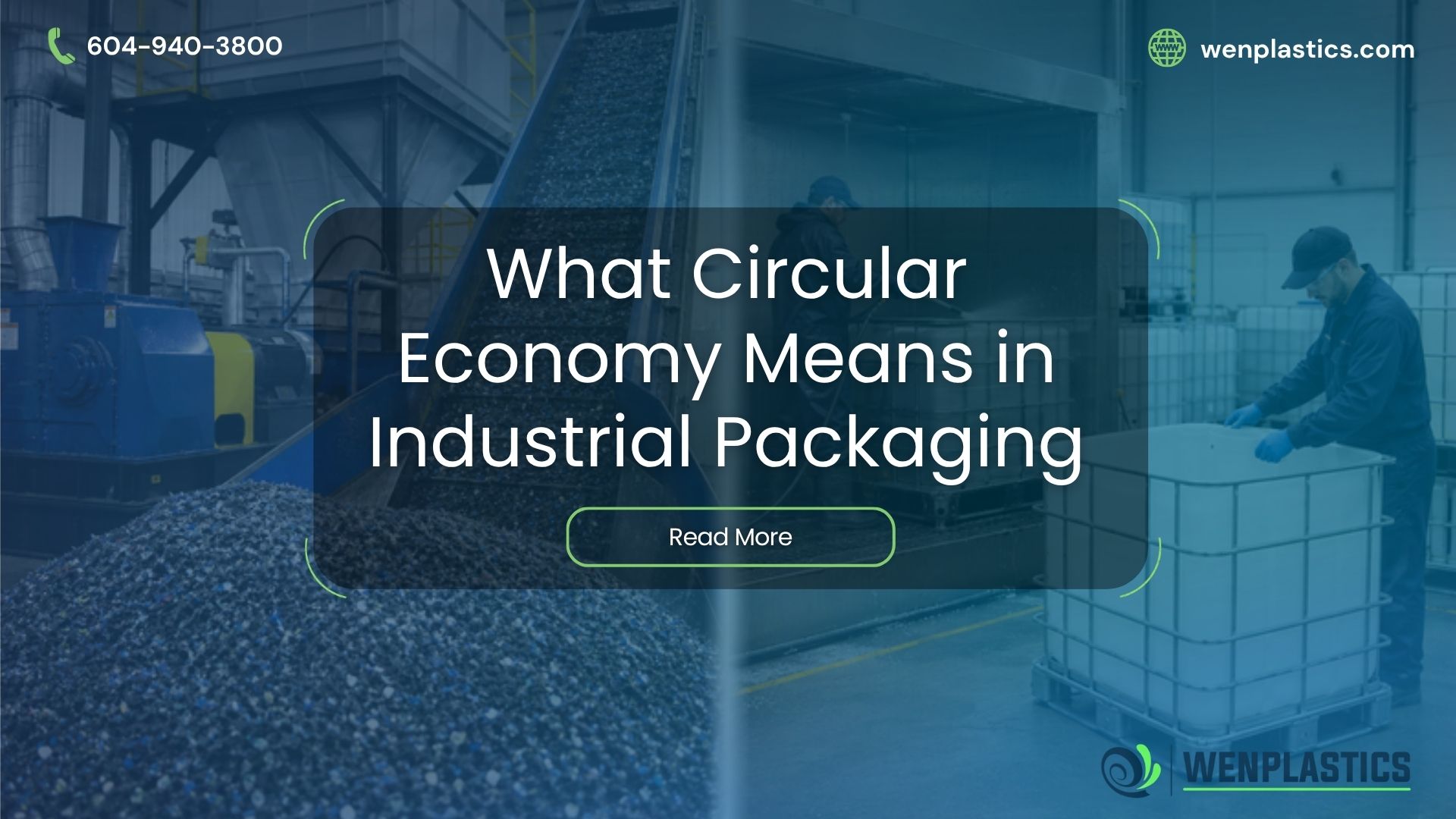
Industrial packaging plays an important role in how products are stored, transported, reused, and recycled. For many businesses, packaging is not just a container. It is part of the supply chain, part of product safety, and part of a company’s environmental impact.
As more companies look for ways to reduce waste and use resources more responsibly, the idea of a circular economy has become increasingly important.
In industrial packaging, circular economy means designing, using, reusing, reconditioning, and recycling packaging materials in a way that keeps resources in use for as long as possible and reduces unnecessary waste.
What Is Circular Economy?
A traditional economy often follows a linear model: take, make, use, and dispose.
In this model, raw materials are used to create products, the products are used, and then they are thrown away when they are no longer needed.
A circular economy works differently. Instead of treating products and materials as waste after one use, it focuses on keeping them in use through reuse, repair, reconditioning, recycling, and responsible material recovery.
In simple terms, circular economy means using resources more efficiently and reducing the amount of material that ends up in landfills.
For industrial packaging, this approach can make a major difference because packaging is often used in large volumes across manufacturing, agriculture, food processing, chemical handling, logistics, and other industries.
Why Circular Economy Matters in Industrial Packaging
Industrial packaging is built to protect products, support transportation, and help businesses manage materials safely. However, when packaging is treated as single-use waste, it can create unnecessary environmental and operational costs.
Circular economy practices help businesses reduce waste while still maintaining packaging performance and safety.
In industrial packaging, circular economy can help:
- Reduce plastic waste
- Extend the life of packaging materials
- Lower demand for new raw materials
- Support more responsible supply chains
- Improve resource efficiency
- Reduce environmental impact
- Create value from materials that might otherwise be discarded
This does not mean that every container can be reused for every application. Safety, contamination risk, regulatory requirements, and product compatibility must always be considered.
However, when managed properly, many industrial packaging materials can have a longer and more useful life.
Reuse: Extending the Life of Industrial Containers
One of the most important parts of circular economy is reuse.
Some industrial containers can be reused multiple times when they are properly inspected, cleaned, and handled. This can reduce the need for new packaging and help businesses get more value from existing materials.
For example, IBC totes are commonly used for bulk liquid storage and transportation. Depending on the product and condition of the container, some totes may be reused, reconditioned, or rebottled instead of being discarded.
Reusable packaging can support a more circular system by keeping containers in service longer.
However, reuse must be done carefully. Businesses should always consider what the container was previously used for, whether it has been cleaned properly, and whether it is suitable for the next product.
For sensitive products such as food ingredients or drinking water applications, new or rebottled containers may be a better choice.
Reconditioning: Giving Packaging a Second Life
Reconditioning is another important part of circular economy in industrial packaging.
A reconditioned container is inspected, cleaned, and prepared for another use. This process helps reduce waste by extending the life of packaging that is still structurally useful.
In the case of IBC totes, reconditioned options can be suitable for some industrial applications where the container history, cleaning process, and product compatibility are acceptable.
Reconditioning helps businesses avoid throwing away containers that can still be used safely and effectively.
This approach can reduce the need for new materials while supporting practical packaging needs in industries that use high volumes of containers.
Rebottled IBC Totes: Combining New and Reused Components
Rebottled IBC totes are a strong example of circular economy in action.
A rebottled tote typically uses a new inner bottle placed inside a reconditioned cage. This gives customers the benefit of a new plastic bottle while allowing the metal cage to be reused.
This option can be useful for businesses that want a clean new bottle but also want to reduce waste by reusing the cage structure.
Rebottled totes can support both product protection and resource efficiency, depending on the application.
For many businesses, this can be a practical middle option between buying a completely new tote and using a fully reconditioned tote.
Recycling: Recovering Value From Plastic Materials
When packaging materials can no longer be reused or reconditioned, recycling becomes another important part of the circular economy.
Plastic recycling helps recover material value from items that would otherwise become waste. Through proper sorting, grinding, and processing, plastic can be turned into regrind and used in suitable manufacturing applications.
Plastic regrind is material that has been processed into small, reusable pieces. It can come from post-industrial plastic materials and may be used as an alternative to virgin plastic in certain applications.
Recycling helps keep plastic in the production cycle and reduces the need for new raw material in applications where recycled content is appropriate.
The Role of Plastic Regrind in Circular Manufacturing
Plastic regrind is an important part of circular manufacturing.
Instead of discarding plastic waste, companies can process clean and suitable plastic materials into regrind. This material can then be used again in manufacturing processes where it meets the required performance and quality standards.
Regrind can help companies:
- Reduce plastic waste
- Lower raw material demand
- Support sustainability goals
- Improve material efficiency
- Create value from recovered plastic
However, regrind must be used correctly. Not every product can be made with recycled material, especially when strict performance, safety, or regulatory requirements apply.
For industrial packaging, material selection must always consider strength, product safety, compliance, and the intended use of the final product.
Designing Packaging With Circularity in Mind
Circular economy is not only about what happens after packaging is used. It also starts with better design and better decision-making.
Industrial packaging can support circularity when companies consider:
- Whether the container can be reused
- Whether parts of the packaging can be reconditioned
- Whether the material can be recycled
- Whether the packaging is durable enough for multiple uses
- Whether the packaging is appropriate for the product
- Whether a rebottled or reconditioned option is suitable
- Whether recycled materials can be used in the right applications
Good packaging decisions help reduce waste without compromising safety, performance, or product quality.
Circular Economy Does Not Mean Lower Quality
One common misconception is that circular packaging always means lower quality. This is not true.
Circular economy is about using the right material and the right packaging option for the right application.
In some cases, a new container is the best and safest choice. In other cases, a rebottled, reconditioned, or recycled material option may be appropriate.
The key is to match the packaging to the product, the risk level, and the industry requirements.
For example, a company handling sensitive food products may need new or food-grade packaging. A company handling certain industrial materials may be able to use reconditioned containers. A manufacturer producing non-food plastic products may be able to use recycled plastic regrind.
Circular economy works best when sustainability and safety are considered together.
How Businesses Can Support Circular Economy in Packaging
Businesses can support circular economy in industrial packaging by making more informed choices throughout their operations.
Some practical steps include:
- Choosing reusable packaging when appropriate
- Using rebottled or reconditioned containers for suitable applications
- Working with suppliers that support recycling and material recovery
- Keeping packaging clean and properly stored
- Separating recyclable materials from general waste
- Avoiding unnecessary disposal of usable containers
- Choosing packaging based on product safety and long-term value
- Considering local suppliers to reduce transportation impact
Small decisions across the supply chain can create a larger positive impact over time.
Wenplastics and Circular Industrial Packaging
Wenplastics supports industrial packaging needs with products and services connected to reuse, reconditioning, and recycling.
Our packaging options include IBC totes, plastic pails, plastic drums, and plastic regrind for businesses across different industries.
By offering options such as new, rebottled, and reconditioned IBC totes, Wenplastics helps customers choose packaging based on their product needs, budget, and sustainability goals.
Our regrind services also support the circular economy by helping recover value from plastic materials and keeping usable resources in circulation.
Final Thoughts
Circular economy in industrial packaging means reducing waste, extending material life, and making better use of resources without compromising safety or performance.
For businesses that use industrial packaging every day, this can include reusable containers, reconditioned packaging, rebottled IBC totes, recycling programs, and plastic regrind.
The best solution depends on the product, industry, safety requirements, and application.
By choosing the right packaging options, companies can support more responsible operations while still meeting practical business needs.
Wenplastics provides industrial packaging solutions that help businesses store, transport, reuse, and recycle materials more efficiently. Contact our team to learn more about our IBC totes, plastic pails, plastic drums, and plastic regrind options.

Comments are closed