
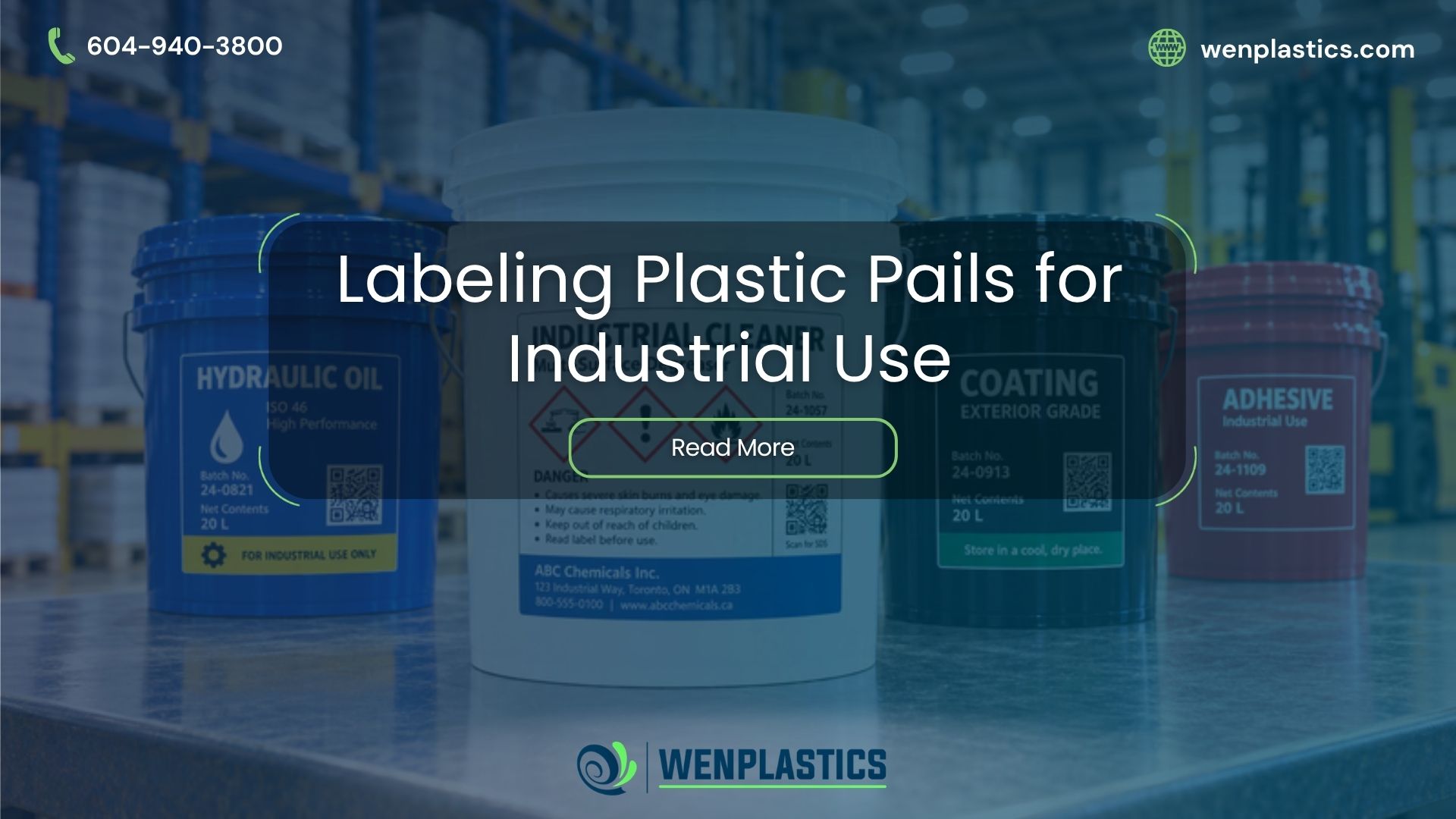
Labeling Plastic Pails for Industrial Use
Plastic pails are widely used across industries to store, handle, and transport materials such as chemicals, coatings, adhesives, lubricants, and other industrial products. While choosing the right container is essential, proper labeling is equally important for safe handling, efficient inventory management, and regulatory compliance.
A clear, durable label helps workers identify a pail’s contents, understand potential hazards, and follow appropriate handling procedures. However, industrial environments can expose labels to moisture, temperature changes, chemicals, and repeated handling, making proper label selection and application essential.
In this article, we’ll explore the key considerations for labeling plastic pails and how businesses can improve their labeling practices.
1. Why Proper Labeling Matters
Industrial plastic pail labeling serves several important purposes beyond simply identifying a product.
Workplace Safety: Clear labels help employees recognize materials, identify potential hazards, and follow appropriate safety procedures.
Regulatory Compliance: Depending on the contents and intended use, plastic pails may require specific hazard symbols, product information, or transportation markings.
Inventory Management: Product identification, batch numbers, and barcodes make it easier to track materials throughout storage and distribution.
Operational Efficiency: Consistent labeling reduces confusion, supports accurate product handling, and helps prevent costly mistakes.
For manufacturers and distributors, an effective labeling system is an important part of maintaining safe and organized operations.
2. What Information Should Be Included on Industrial Pail Labels?
The information required on a plastic pail depends on the material being stored, applicable regulations, and the industry in which it will be used.
Common labeling elements include:
- Product Name: Clearly identifies the substance or material inside the pail.
- Manufacturer or Supplier Information: Provides contact details for product identification and inquiries.
- Batch or Lot Number: Supports traceability and quality control.
- Handling and Storage Instructions: Communicates important recommendations for safe use.
- Hazard Symbols and Warnings: Identifies potential risks when required.
- Barcodes or QR Codes: Enables digital tracking and inventory management.
For hazardous products used in Canadian workplaces, the Workplace Hazardous Materials Information System (WHMIS) establishes specific labeling requirements. Supplier labels generally must include prescribed hazard communication elements in both English and French. Workplace labels have different requirements, depending on the circumstances and applicable jurisdiction.
Businesses should always confirm which requirements apply to their specific products before preparing labels.
3. Choosing Durable Labels for Industrial Environments
Industrial plastic pails often experience demanding conditions during transportation, storage, and daily handling.
Labels that peel, fade, or become unreadable can create operational difficulties and potential safety risks. Choosing an appropriate label material and adhesive can help prevent these problems.
When selecting labels, consider the following factors:
Moisture Resistance: Waterproof or moisture-resistant labels can help maintain readability in damp warehouses, outdoor storage areas, or environments where condensation occurs.
Chemical Resistance: Labels may come into contact with oils, cleaning products, or other substances. Materials and printing methods should be selected based on the expected exposure.
Temperature Resistance: Storage conditions can vary significantly. Labels should remain securely attached and readable throughout the expected temperature range.
Adhesive Compatibility: Plastic pails are commonly manufactured from high-density polyethylene (HDPE), which can be challenging for some adhesives. Selecting an adhesive specifically suited to HDPE surfaces can improve adhesion.
Polypropylene and polyester film labels are common options for industrial applications, although their suitability depends on the adhesive, printing method, and environmental conditions.
4. Best Practices for Applying Labels to Plastic Pails
Even high-quality labels can fail if they are applied incorrectly.
Following consistent application procedures can improve adhesion, visibility, and long-term performance.
Select the Right Surface
Whenever possible, apply labels to a smooth, relatively flat area of the pail. Avoid textured sections, sharp curves, and areas where the label may be damaged during handling.
Clean the Surface Before Application
Dust, oil, moisture, and manufacturing residues can interfere with adhesive performance.
Make sure the application area is clean and dry before attaching a label, following the label manufacturer’s surface preparation recommendations.
Position Labels for Easy Identification
Labels should remain visible during normal storage and handling. Avoid placing essential information where it may be concealed by stacking arrangements, equipment, or other packaging.
Consider Storage and Transportation Conditions
Labels should be evaluated under the conditions in which the pails will actually be used, including humidity, temperature changes, and repeated handling.
Testing label adhesion and readability before large-scale implementation can help businesses avoid recurring labeling problems.
5. Labeling Requirements for Hazardous Materials
When plastic pails contain hazardous products, labeling becomes an important part of regulatory compliance.
In Canada, two major regulatory frameworks may apply:
WHMIS: Provides hazard communication requirements for hazardous products used in workplaces, including supplier and workplace labeling.
Transportation of Dangerous Goods (TDG): Establishes requirements for identifying and marking dangerous goods during transportation.
For dangerous goods transported in small means of containment, applicable TDG requirements can include hazard class labels, shipping names, UN numbers, and other markings. Required marks must meet visibility, durability, and placement specifications.
It is important to recognize that WHMIS labels and TDG markings serve different purposes, and one does not automatically replace the other.
In addition to appropriate labeling, businesses transporting dangerous goods must ensure that the packaging itself meets the applicable containment requirements. A UN-rated pail must be suitable for the intended contents and transport conditions; applying a hazard label does not make a non-certified container UN compliant.
6. Improving Traceability with Digital Labeling
As industrial operations become increasingly digital, many companies are incorporating barcodes and QR codes into their plastic pail labeling systems.
These tools can support:
- Inventory tracking and stock management
- Batch identification and product traceability
- Access to product specifications and documentation
- More efficient warehouse operations
- Improved recordkeeping throughout distribution
For example, scanning a QR code could direct employees to product instructions, technical documentation, or other relevant information.
Digital labeling can complement traditional labeling, but it should not replace mandatory safety information that regulations require to appear directly on the container.
7. Choosing the Right Plastic Pail for Your Application
Effective labeling is only one part of selecting appropriate industrial packaging.
Businesses should also consider the pail’s capacity, construction, material compatibility, closure system, and intended handling conditions.
For applications involving regulated dangerous goods, the appropriate UN-certified packaging may be necessary.
At Wenplastics, we manufacture industrial plastic pails in Canada, offering packaging solutions for businesses that require reliable containers for their operations.
Our plastic pails are designed to support a variety of industrial packaging needs, with options that include UN-rated pails for applicable uses.
By selecting suitable containers and implementing consistent labeling practices, businesses can improve material identification, workplace safety, and efficiency throughout their supply chains.
Conclusion
Proper labeling plays an essential role in the safe and efficient use of industrial plastic pails. From choosing durable label materials to ensuring clear product identification and meeting applicable regulatory requirements, every detail contributes to effective industrial packaging.
Businesses that invest in reliable containers and well-designed labeling systems can reduce handling errors, improve traceability, and support safer operations.
Looking for industrial plastic pails?
Wenplastics manufactures plastic pails in Canada for industrial packaging applications. Contact Wenplastics to learn more about our available products and find the right packaging solution for your business.

Comments are closed